Nose shapes vary significantly across different ethnicities, influenced by genetic, environmental, and cultural factors. This article explores the unique characteristics of nose shapes among Europeans, Middle Easterners, Asians, Africans, and Americans.
Understanding these differences is not only important from an anthropological perspective but also plays a key role in modern aesthetic medicine and rhinoplasty planning.
In this guide, we explore common nose shapes across major ethnic groups, how they are classified, how beauty standards have evolved, and how modern rhinoplasty techniques address different nasal structures while preserving ethnic identity.
Quick Visual Guide: Common Nose Shapes
Commonly discussed nose shapes include:
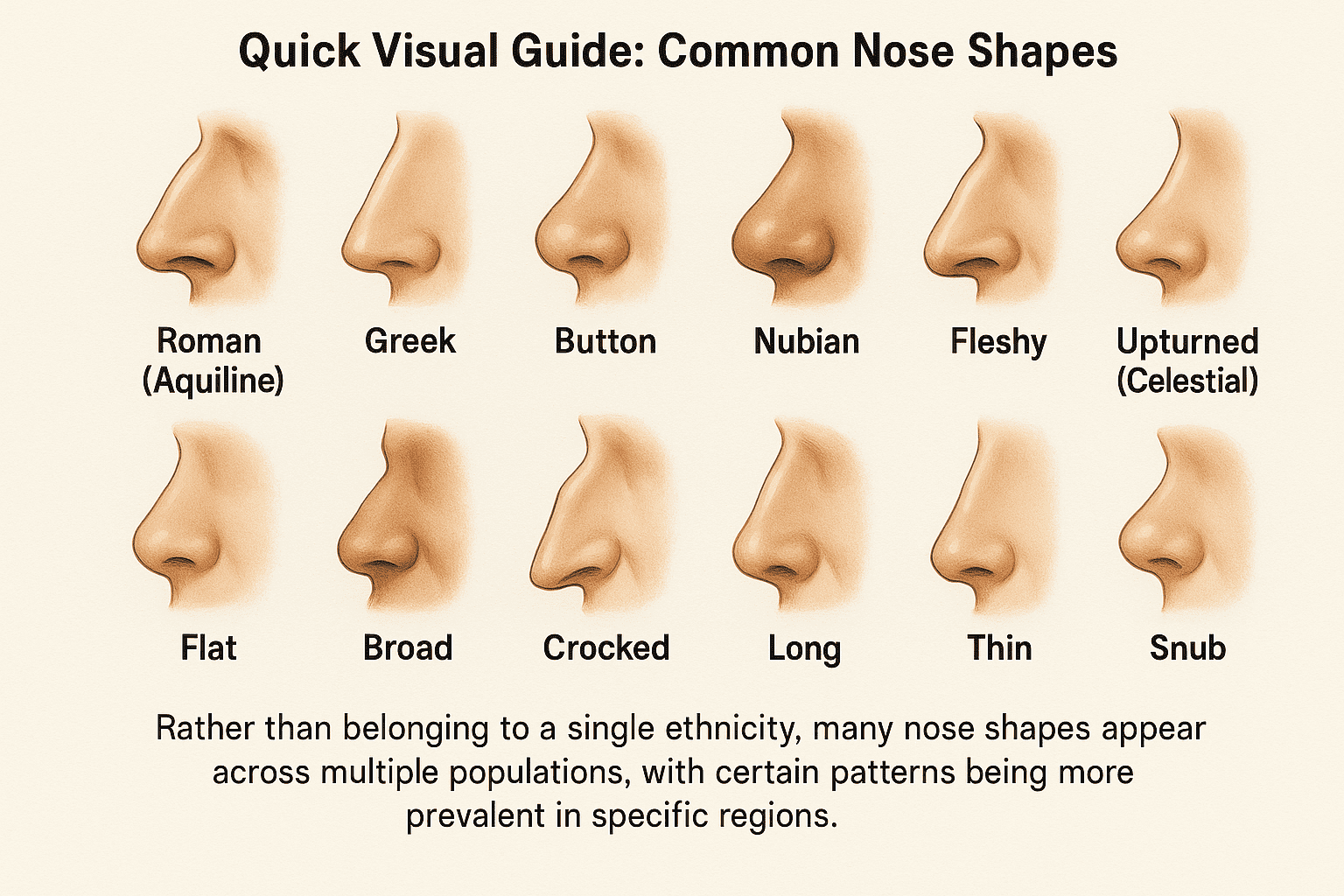
Different Nose Shapes by Ethnicity
European Nose Shapes
European nasal anatomy often features a high, narrow bridge, with well-defined bone structure. Variations exist across regions, influenced by climate and genetic diversity.
Common European Nose Types
-
Roman / Aquiline (prominent bridge)
-
Hawk nose
-
Straight nose
Roman (Aquiline) Nose – Model Example
The Roman nose is characterized by a prominent, slightly convex bridge and strong profile definition. It is commonly observed among individuals of European and Middle Eastern descent.
Key features:
-
High nasal bridge
-
Mild dorsal hump
-
Strong facial presence
Rhinoplasty considerations:
Patients often seek subtle dorsal smoothing rather than dramatic reduction, using preservation rhinoplasty techniques to maintain natural structure.
Middle Eastern Nose Shapes
Middle Eastern noses are widely recognized for their high bridges and pronounced dorsal humps, particularly in regions such as Iran, Turkey, and Lebanon.
Common Middle Eastern Nose Types
-
Hooked
-
Prominent bridge
-
Drooping or bulbous tip
Rhinoplasty is especially prevalent in this region, with patients frequently requesting refinement rather than complete reshaping, reflecting a growing trend toward ethnic-preserving rhinoplasty.
Asian Nose Shapes
Asian noses, particularly among East Asian populations, tend to feature a lower nasal bridge, softer cartilage, and broader tip.
Common Asian Nose Types
-
Flat nose
-
Button nose
-
Low-bridge nose
-
Snub nose
Button Nose – Model Example
The button nose is small, rounded, and softly projected. While often associated with East Asian populations, it is also seen globally.
Rhinoplasty considerations:
Asian rhinoplasty often focuses on bridge augmentation and subtle tip definition rather than reduction.
African Nose Shapes
African nasal anatomy typically includes a wider nasal base, flared nostrils, and thicker skin, particularly in Sub-Saharan populations.
Common African Nose Types
-
Nubian nose
-
Broad nose
-
Flat nose
-
Rounded tip
Nubian Nose – Model Example
The Nubian nose features a wide base and thick skin, often admired for its strong cultural identity.
Rhinoplasty considerations:
Modern techniques emphasize nostril refinement and base narrowing while preserving ethnic harmony.
American & Mixed-Ethnicity Nose Shapes
Due to multicultural heritage, American nose shapes represent a wide spectrum of anatomical features.
Common Nose Types in Mixed Populations
-
Bulbous nose
Fleshy Nose – Model Example
Characterized by thick skin and a rounded tip, the fleshy nose often requires advanced cartilage shaping rather than aggressive reduction.

Comparing Nose Shapes Across Ethnicities
| Nose Shape | Structural Traits | Commonly Seen In | Typical Rhinoplasty Goals |
|---|---|---|---|
| Roman | High convex bridge | European, Middle Eastern | Dorsal smoothing |
| Button | Rounded, small tip | Asian, Mixed | Tip refinement |
| Nubian | Wide base, thick skin | African | Alar base narrowing |
| Fleshy | Thick skin, bulbous tip | Mixed | Tip definition |
| Greek | Straight narrow bridge | European | Preservation |
Prevalence of Rhinoplasty
Rhinoplasty is one of the most common cosmetic surgeries worldwide. Its prevalence varies by region:
- Middle East: Countries like Iran and Lebanon have some of the highest rates of rhinoplasty per capita. The cultural emphasis on facial aesthetics drives the popularity of nose jobs.
- Asia: South Korea is known for its advanced cosmetic surgery industry, with rhinoplasty being one of the top procedures. The goal often includes creating a higher nasal bridge and a more defined profile.
- Europe and America: Rhinoplasty is widespread, with a focus on achieving natural-looking results that enhance individual features. The surgery is popular among various ethnic groups, reflecting the diverse population.
Trends and Fashion in Nose Shapes
Historical Trends
Historically, different nose shapes have been favored in various cultures. In ancient Greece, a straight, well-proportioned nose was considered ideal. During the Renaissance, European art often depicted high-bridged, aquiline noses as a symbol of nobility.
Modern Trends
In the modern era, trends in nose shapes are influenced by celebrities, media, and cultural icons. For instance, a small, refined nose with a slight upturn is currently popular in Western countries, influenced by Hollywood standards. In contrast, maintaining ethnic identity while enhancing aesthetic appeal is a growing trend in rhinoplasty practices worldwide.
Future Trends
The future of nose aesthetics may see a shift towards more personalized and less invasive procedures. Advances in non-surgical rhinoplasty, using fillers to reshape the nose temporarily, are gaining popularity. Additionally, a focus on preserving ethnic features while achieving aesthetic goals is expected to continue.
Comparing Nose Shapes Across Ethnicities
Structural Differences
- Bone and Cartilage: The underlying bone and cartilage structure greatly influences nose shape. Europeans typically have a more pronounced nasal bone, while Asians have a flatter nasal structure.
- Skin Thickness: Thicker skin, as seen in many African populations, can affect the definition of the nasal tip compared to thinner skin seen in Europeans and Asians.
Cosmetic Preferences
- Middle Easterners: Prefer a reduction in the dorsal hump and refinement of the nasal tip.
- Asians: Often seek augmentation of the nasal bridge.
- Africans: May prefer narrowing of the nasal base and refining the nostrils.
- Europeans and Americans: Focus on achieving a balanced and natural appearance that complements their facial features.
Rhinoplasty: Historical and Future Perspectives
History of Rhinoplasty
Rhinoplasty has a long history, dating back to ancient India, where the procedure was used to reconstruct noses lost due to punishment or injury. Modern rhinoplasty began in the late 19th and early 20th centuries with advancements in surgical techniques and anesthesia.
Future of Rhinoplasty
The future of rhinoplasty is likely to be shaped by technological advancements, including 3D imaging for precise surgical planning and the use of stem cells for tissue regeneration. Non-surgical options will also continue to grow, providing alternatives for those seeking subtle changes without undergoing surgery.
FAQs About Nose Shapes and Rhinoplasty
Q1: What is the most common type of nose shape among different ethnicities?
A1: Roman, button, Nubian, Greek, and fleshy noses are among the most commonly discussed types. nose shapes vary widely among ethnicities. Europeans often have high, narrow bridges; Middle Easterners have prominent bridges and dorsal humps; Asians have lower bridges and broader nostrils; Africans have wider bases and flatter bridges.
Q2: Why is rhinoplasty so popular in the Middle East?
A2: Rhinoplasty is popular in the Middle East due to cultural emphasis on facial aesthetics and the desire to refine prominent nasal features.
Q3: How does non-surgical rhinoplasty work?
A3: Non-surgical rhinoplasty involves using dermal fillers to temporarily alter the shape of the nose, providing a non-invasive option for minor corrections.
Q4: Are there trends in nose shapes that change over time?
A4: Yes, trends in nose shapes can change due to cultural influences, celebrity impact, and advancements in cosmetic procedures.
Q5: Is it possible to maintain ethnic features while having rhinoplasty?
A5: Yes, many modern rhinoplasty techniques focus on preserving ethnic identity while enhancing the nose’s appearance to meet the patient’s aesthetic goals.
Q6: Is one nose shape more attractive than others?
A6: Attractiveness is subjective and culturally influenced. There is no universally “ideal” nose shape.
Conclusion
Nose shapes vary significantly across different ethnicities, influenced by genetic, environmental, and cultural factors. Understanding these differences is crucial for appreciating the diverse beauty standards and the role of rhinoplasty in enhancing individual features while respecting ethnic identities. As trends and technologies evolve, the future of nose aesthetics will continue to offer personalized and innovative solutions for those seeking to improve their appearance.
To explore recent scientific insights into nasal morphology and ethnic variations, see the PubMed study on nasal anatomy across different populations for detailed medical analysis and comparative data.