
7 Best Alternatives to Dental Implants (Pros, Cons & Cost Comparison Guide)
Dental implants are often considered the gold standard for replacing missing teeth. They are durable, stable, and natural-looking. However, not […]
Laser eye surgery (LASIK, PRK, and similar procedures) is one of the most widely performed and safest vision correction methods […]
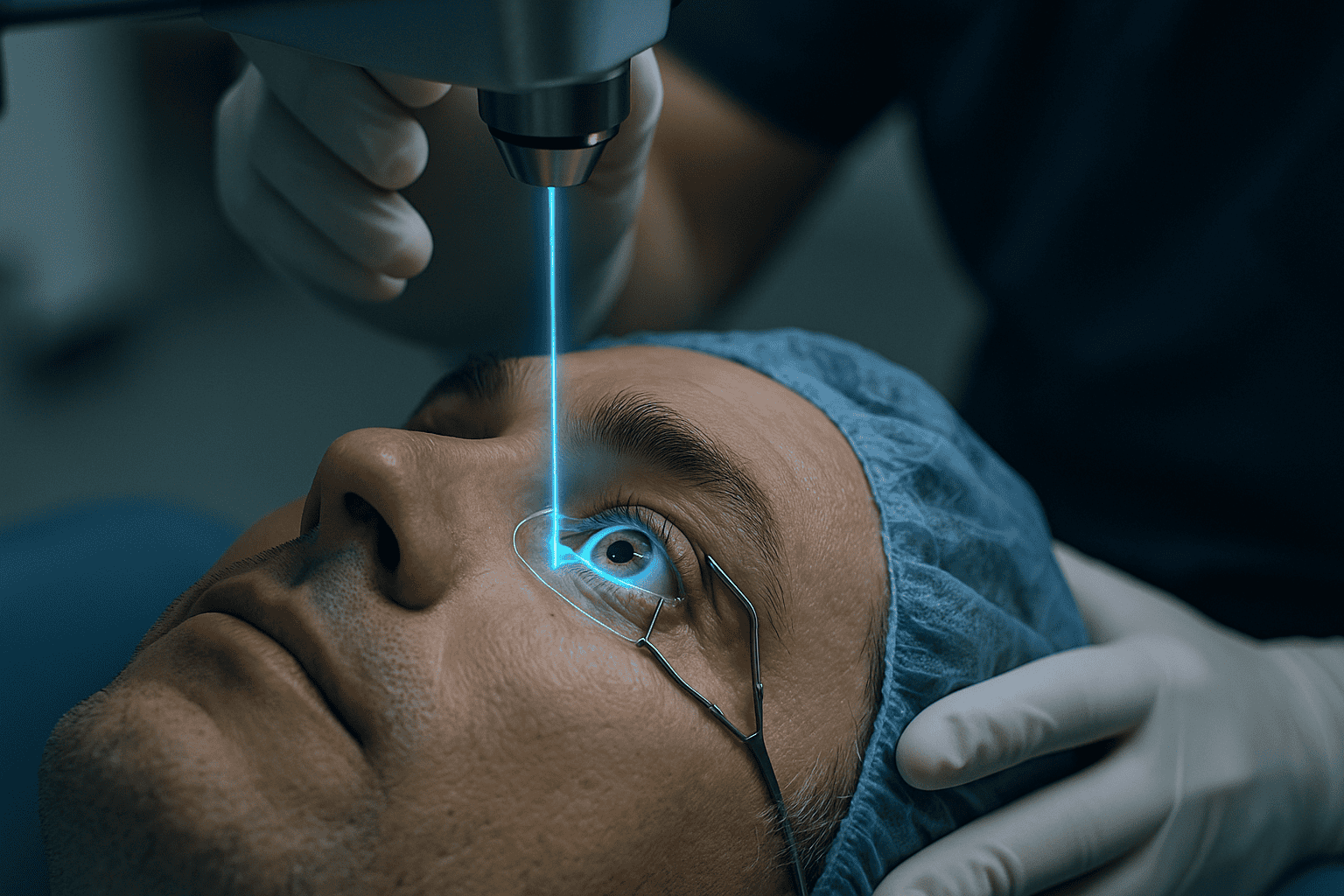
Laser eye surgery (LASIK, PRK, and similar procedures) is one of the most widely performed and safest vision correction methods in the world. Yet many people still wonder:
Because of misinformation on social media and viral cosmetic trends, a large number of patients worry that laser procedures may alter the color of the iris, make the eyes lighter, or create visible pigment changes.
In this comprehensive medical guide, we explain:
Whether laser eye surgery can change eye color
Why this myth exists
What science and ophthalmologists say
Rare side effects that might change the appearance of the eye
The difference between vision-correction laser and cosmetic iris laser
Safe and unsafe alternatives for changing eye color
This article offers a fully evidence-based answer so you can make an informed decision about your eye health.
According to the American Academy of Ophthalmology (AAO), laser eye surgery does not and cannot change the color of your eyes.
Why?
Laser vision correction only reshapes the cornea
The cornea is transparent, with no pigment
Eye color comes from the iris, located behind the cornea
The laser does not reach or affect iris pigmentation (melanin)
Therefore:
Your eye color remains exactly the same before and after surgery.
To understand why color remains unchanged, let’s simplify the eye’s anatomy:
Cornea – transparent outer layer (laser operates here)
Iris – the colored part of the eye (laser does NOT touch this)
Melanin – pigment responsible for eye color
Lens – focuses light
During LASIK or PRK, the laser removes microscopic layers from the cornea to correct nearsightedness, farsightedness, or astigmatism.
The iris sits behind the cornea and remains completely untouched.
Therefore, eye color never changes.
This is one of the most common misconceptions. Here are the real reasons why people believe their eye color looks different after surgery:
Temporary dryness can make the eye appear:
Brighter
Clearer
More reflective
This effect can create the illusion of a lighter eye color — but it is not a real color change.
After laser reshaping, the cornea becomes smoother.
This increases the reflection of light and may make the iris look:
Shinier
More intense
Again, this is just a visual effect.
Post-operative eye drops can cause:
Larger pupils
Smaller pupils
Pupil size affects how much of the iris is visible, creating a different contrast, but not a different color.
Some people confuse LASIK with a dangerous cosmetic procedure called laser iris depigmentation, which does aim to change eye color.
LASIK is not that procedure.
Color does NOT change — but in rare cases, the appearance of the eye can temporarily look different.
Small red patches on the white of the eye.
Swelling of the cornea might make the eye appear cloudy.
May affect the visual appearance but not the actual pigment.
Can make the eye look slightly different for a few days.
All of these effects are temporary and do not affect melanin or iris color.
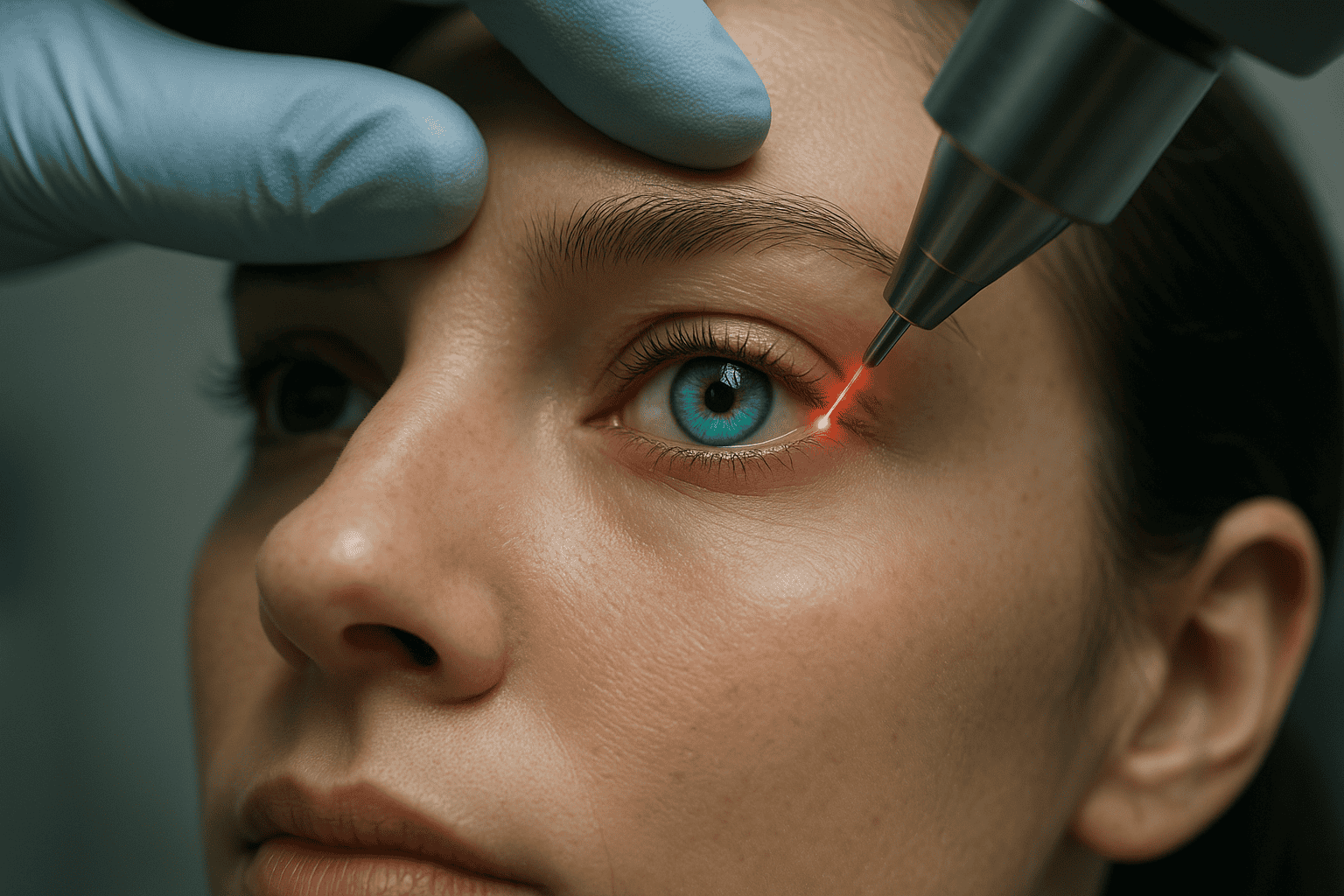
Some clinics in a few countries advertise procedures like:
Laser iris depigmentation
Eye color change laser
Stroma procedure
These procedures attempt to lighten brown eyes by destroying melanin in the iris.
They are widely considered unsafe
They are not approved in most countries
They have caused cases of permanent vision damage
Many patients required emergency surgery afterward
Do not confuse this with LASIK.
“Laser vision correction has no effect on iris pigmentation and does not change eye color.”
“LASIK works only on the cornea. It cannot reach or modify eye color.”
“Any perceived color change after LASIK is optical and temporary, not pigment-related.”
Therefore, if you are a suitable candidate for laser vision correction, you should not worry about iris color changes.
Safe, temporary, affordable
(Only use medically approved lenses)
Extremely risky — not recommended
Not medically approved — avoid
If you want professional advice about eye procedures or need to consult reputable ophthalmologists, you can always use:
🔗 Tabeebo — a trusted healthcare platform connecting patients with certified eye specialists in the Middle East.
This ensures you receive accurate information directly from qualified experts.
It does not affect the iris or melanin
Any visual difference is temporary and optical
LASIK is medically safe for the vast majority of patients
Cosmetic color-changing laser is a completely different and risky procedure
Laser eye surgery is about correcting vision — not color.
No. LASIK does not affect iris pigmentation. Only risky cosmetic procedures attempt this.
Dryness and increased reflection can cause temporary visual brightness, not a real color change.
In most countries, it is not approved due to serious safety concerns.
Medically approved colored contact lenses.
No. PRK and LASIK work on the cornea only.
American Academy of Ophthalmology (AAO) – LASIK Facts & Safety
Cleveland Clinic – Laser Eye Surgery Overview
Mayo Clinic – LASIK Side Effects
Johns Hopkins Medicine – Understanding Eye Structure
American Journal of Ophthalmology – Risks of Cosmetic Iris Implants
Dental implants are often considered the gold standard for replacing missing teeth. They are durable, stable, and natural-looking. However, not […]

A bulbous nasal tip is one of the most frequent concerns among rhinoplasty patients—and one of the most misunderstood. Unlike […]

An upturned nose, often referred to as a celestial nose, is one of the most recognizable and debated nasal shapes […]

The Roman nose—also known as the aquiline nose—is one of the most recognizable and historically significant nose shapes. Characterized by […]

A fleshy nose is one of the most misunderstood nose types in facial aesthetics. Many people with this nasal structure […]

The Greek nose is one of the most recognizable and historically admired nose shapes in the world. Often associated with […]
Summary
