
“Chronic Pain with No Cause? The Hidden Impact of Psychosomatic Disorders”
Ever experienced a mysterious pain that left doctors scratching their heads? You’ve been through a battery of tests, and everything […]
Non-surgical labiaplasty has quickly become a popular option for women who want to improve comfort, boost confidence, and address changes […]
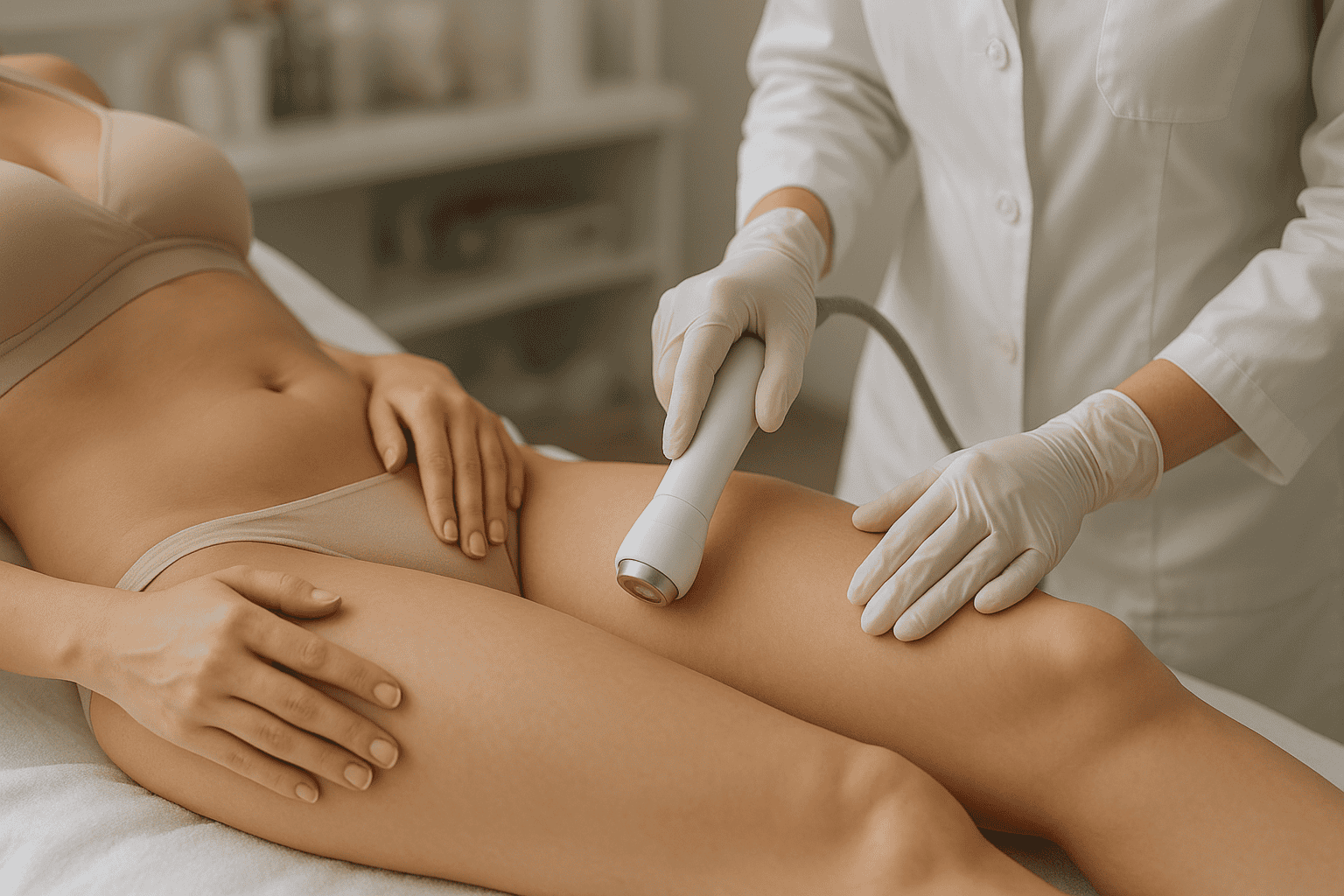
Non-surgical labiaplasty has quickly become a popular option for women who want to improve comfort, boost confidence, and address changes in the appearance of the labia—without going through surgery. Whether due to aging, childbirth, genetics, or simply personal preference, many women experience concerns related to laxity, asymmetry, bulging, or irritation of the labia. Today, advanced technologies make it possible to achieve meaningful improvement through minimally invasive techniques.
This guide provides an in-depth look at what non-surgical labiaplasty is, how it works, the benefits and risks, recovery expectations, and who is most likely to benefit from these treatments. It is written in a humanized and medically accurate manner to help you make an informed decision.
Non-surgical labiaplasty refers to a range of minimally invasive procedures that reshape, tighten, or rejuvenate the labia without the need for surgical incisions. Instead of removing tissue with a scalpel, these methods use energy-based devices or injectable fillers to stimulate collagen, improve elasticity, tighten loose skin, or add volume where needed.
Unlike traditional labiaplasty—which may require several weeks of downtime—non-surgical alternatives offer a far gentler experience, often with little to no recovery time. For many women, this approach provides visible improvement while still preserving a natural appearance.
Every woman’s reasons are unique, but some of the most common motivations include:
Changes in the labial tissue—such as elongation, asymmetry, or sagging—can occur due to childbirth, hormonal shifts, aging, or genetics. Some women simply prefer a more balanced or refined appearance.
Enlarged or lax labia can lead to discomfort during:
Exercise or sports
Cycling
Running
Sexual activity
Wearing tight clothing
Reducing volume or tightening the tissue can significantly improve comfort.
Not everyone feels ready for surgery. Non-surgical labiaplasty provides a middle ground—less intense than surgery but offering noticeable improvement.
Most treatments allow patients to return to daily activities almost immediately, which is especially valuable for women with busy schedules.

Modern non-surgical labiaplasty typically involves one or a combination of the following methods:
Radiofrequency technology gently heats the deeper layers of the labial tissue. This stimulates collagen and elastin production, causing the tissue to tighten over several weeks.
Smooths and tightens loose labial skin
Improves elasticity
Reduces mild hypertrophy
Enhances comfort
Clinical research shows that RF energy can significantly improve laxity and collagen remodeling, making it one of the most widely used non-surgical techniques.
HIFU uses targeted ultrasound waves to create controlled heat points in the tissue. This triggers a natural healing response, leading to tightening and firming.
No incisions or injections
Gradual and natural-looking results
Suitable for both labia minora and labia majora
Mild or no downtime
Studies have shown that HIFU can effectively tighten genital tissue and improve overall tone.
While tightening is ideal for loose or elongated labia, some women experience the opposite problem—loss of fullness, wrinkling, or sagging of the labia majora. In these cases, HA fillers can restore volume and smooth the outer lips.
Replace lost volume
Improve symmetry
Provide a youthful, smoother contour
Enhance comfort by reducing friction
Results typically last 12–18 months, depending on metabolism and lifestyle.
Many clinics combine RF or HIFU tightening with fillers to create a more complete rejuvenation. This holistic approach can address several concerns at once: laxity, volume loss, wrinkling, or asymmetry.
Women often choose non-surgical labiaplasty because of the meaningful improvements and subtle, natural-looking results.
Improved comfort during daily activities or exercise
Reduced irritation caused by friction
Enhanced sexual comfort
Better symmetry and appearance
Quick procedure times (usually under an hour)
Minimal recovery time
Lower risk compared to surgery
No visible scars
The gradual nature of the improvement is also a benefit—results build steadily, allowing your body to respond naturally.
Non-surgical labiaplasty is safer than surgery, but it is not risk-free. Understanding the limitations helps set realistic expectations.
Mild swelling or redness
Temporary sensitivity
Warmth in the treated area
Minor bruising (in filler treatments)
These usually resolve quickly and do not interfere with daily life.
It cannot remove large amounts of excess skin
Results are not permanent
Some women may require multiple sessions
Severe hypertrophy may still require surgery
Because of these limitations, choosing the right technique—and an experienced specialist—is essential.
You may be a suitable candidate if you:
✔ Want a subtle or moderate improvement without surgery
✔ Feel discomfort during exercise or daily activities
✔ Have mild-to-moderate laxity of the labia
✔ Have volume loss in the labia majora
✔ Prefer minimal downtime
✔ Are not pregnant and have no active infections
During consultation, your specialist will help determine which technique is best suited to your anatomy and goals.
Most appointments last 20–60 minutes. A topical numbing cream or local anesthetic is applied to ensure comfort. Depending on the technique, the specialist will either apply an RF or HIFU device to the area or inject filler into the labia majora.
Recovery is usually straightforward. Many women go back to work or daily tasks immediately afterward.
For 48–72 hours, it’s recommended to avoid:
Sexual activity
Intense exercise
Saunas or hot baths
Very tight clothing
Immediate changes may be noticeable (tightness or fullness)
Most improvement occurs over 6–12 weeks
Longevity ranges from 12 to 24 months depending on the technique
| Feature | Non-Surgical | Surgical |
|---|---|---|
| Incisions | No | Yes |
| Downtime | Minimal | 2–4 weeks |
| Pain | Mild | Moderate |
| Scarring | None | Small |
| Results | Subtle to moderate | Dramatic |
| Longevity | 1–2 years | Permanent |
| Best for | Mild to moderate changes | Significant hypertrophy |
Both approaches have their place. Women seeking major correction may still need surgery, while those wanting natural refinements often find non-surgical treatments more appealing.
Selecting an experienced provider is the most important factor in achieving safe and satisfying results. Look for someone who:
Specializes in intimate or aesthetic gynecology
Uses FDA-approved devices
Has a history of successful cases
Provides realistic expectations
Offers personalized treatment plans
If you want to explore your options or find trusted specialists, you can browse qualified doctors and clinics on Tabeebo. The platform makes it easy to compare providers, review credentials, and book consultations in your preferred region.
A helpful starting point is Tabeebo’s educational overview of labiaplasty and related treatments, which you can find here:
➡️ https://tabeebo.com/labiaplasty/
Aesthetic Surgery Journal – Radiofrequency tightening outcomes
https://academic.oup.com/asj/article/40/5/NP266/5566372
PubMed – Radiofrequency treatment for genital tissue laxity
https://pubmed.ncbi.nlm.nih.gov/29616806/
PubMed – High-intensity focused ultrasound for genital rejuvenation
https://pubmed.ncbi.nlm.nih.gov/33480546/
PubMed – Hyaluronic acid filler augmentation for labia majora
https://pubmed.ncbi.nlm.nih.gov/27272040/
Cleveland Clinic – Vaginal and vulvar rejuvenation overview
https://my.clevelandclinic.org/health/treatments/22384-vaginal-rejuvenation
American College of Obstetricians and Gynecologists (ACOG) – Guidance on cosmetic gynecology
https://www.acog.org/clinical/clinical-guidance/committee-opinion/articles/2020/01/vaginal-rejuvenation-procedures
Ever experienced a mysterious pain that left doctors scratching their heads? You’ve been through a battery of tests, and everything […]

Allergies and asthma are common chronic conditions that affect millions of people worldwide. They often occur together, and understanding their […]

Cancer is a broad term encompassing a group of diseases characterized by the uncontrolled growth and spread of abnormal cells. […]

The eyes are among the most complex and delicate organs in the human body, crucial for our ability to perceive […]
Migraines are a debilitating neurological condition affecting millions of people worldwide. This article provides an in-depth look at migraines, covering […]

Alopecia, a condition characterized by hair loss, affects millions of people worldwide. While it is often considered a cosmetic issue, […]
Summary
