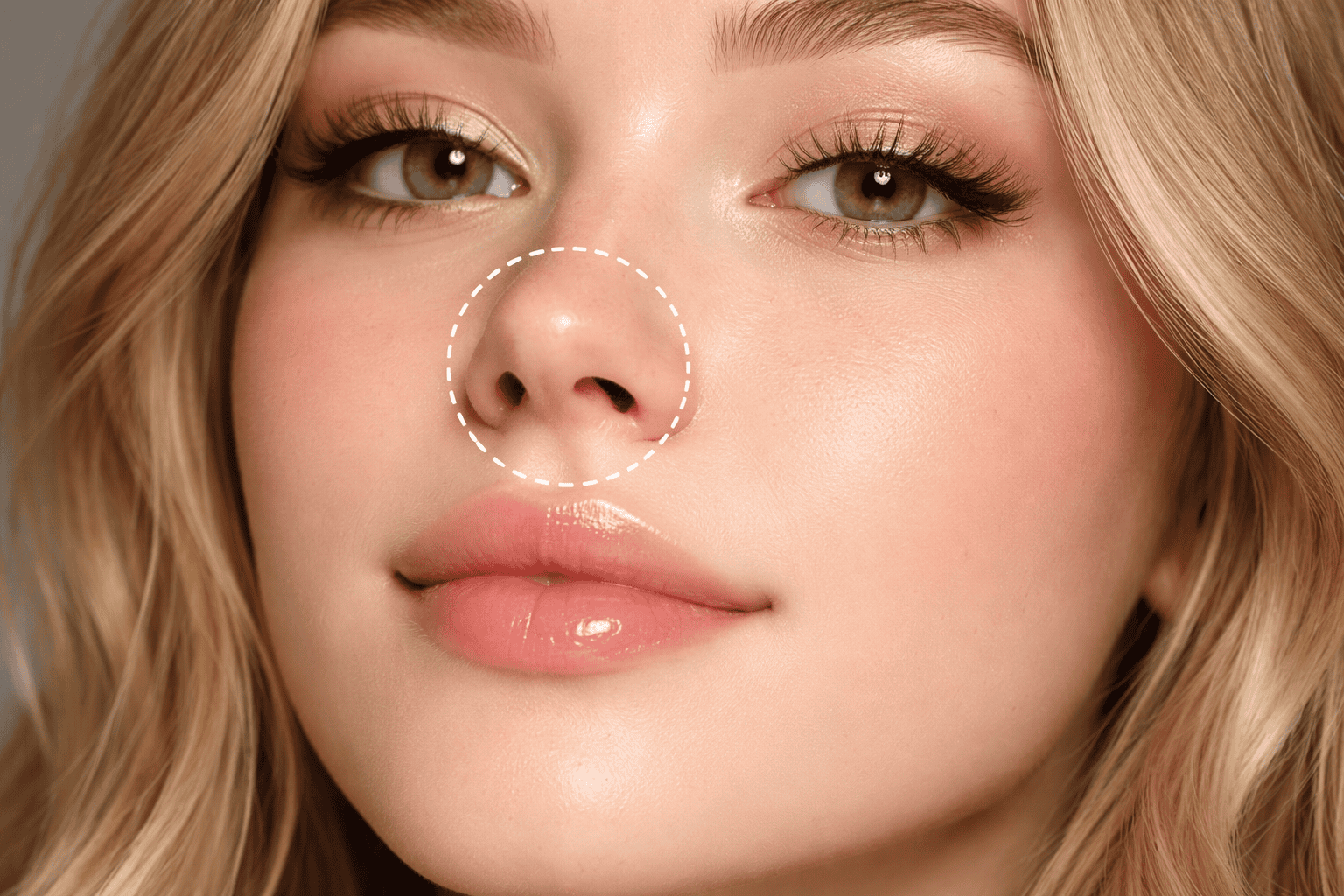
An upturned nose, often referred to as a celestial nose, is one of the most recognizable and debated nasal shapes in facial aesthetics. Characterized by an elevated nasal tip and visible nostrils when viewed from the front or side, this nose type can appear youthful, delicate, and refined — or overly rotated and unnatural, depending on anatomy and proportion.
In recent years, interest in the upturned nose has increased due to social media trends, celebrity influence, and advancements in rhinoplasty techniques. However, understanding what truly defines an upturned nose — and why it happens — is essential before considering any aesthetic intervention.
This article provides a medically accurate, humanized, and comprehensive explanation of the celestial nose, including anatomy, causes, aesthetic considerations, treatment options, and common mistakes.
What Is an Upturned (Celestial) Nose?
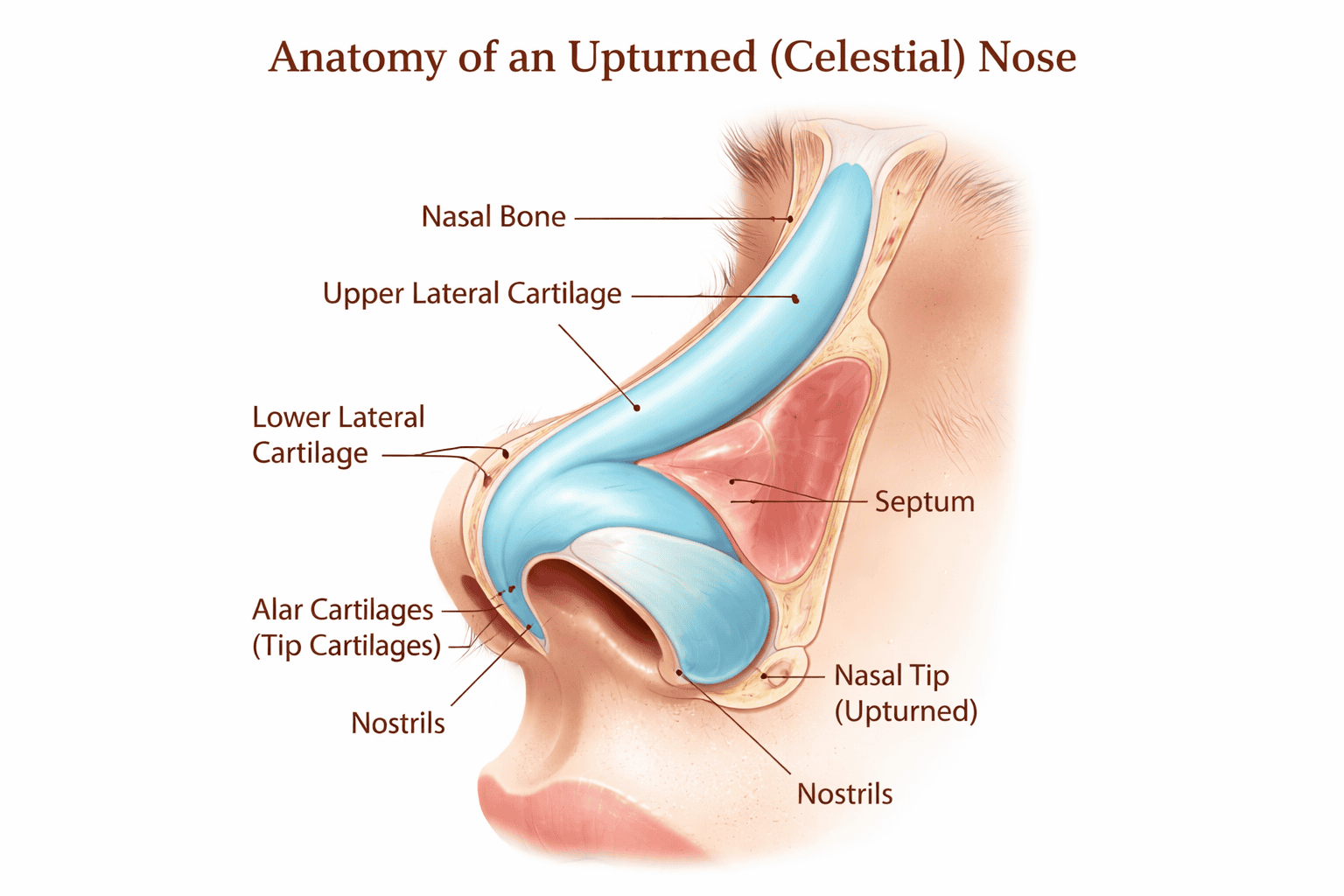
An upturned nose is defined by increased rotation of the nasal tip, resulting in a higher angle between the upper lip and the columella (the tissue separating the nostrils).
Key anatomical features include:
In facial analysis, the nasolabial angle typically measures:
-
95–105° in men
-
100–110° in women
When this angle exceeds the upper range, the nose may appear over-rotated, which is when aesthetic concerns often arise.
The term “celestial nose” is commonly used in aesthetic medicine to describe a softly upturned, elegant nasal tip — not an excessively raised or “piggy” appearance.
Traits of an Upturned Nose
An upturned nose can be either naturally occurring or surgically induced. Its visual traits may include:
-
Youthful and light appearance
-
Emphasis on the nasal tip rather than the bridge
-
Reduced nasal projection
-
A playful or delicate facial impression
-
Strong interaction with lip and smile dynamics
Importantly, context matters. An upturned nose that looks harmonious on one face may appear exaggerated on another due to differences in chin projection, lip fullness, cheek volume, and ethnicity.
To understand how nose shapes vary naturally across populations, you may find this related guide helpful:
👉 https://tabeebo.com/what-are-the-different-nose-shapes-across-ethnicities/
Why Does an Upturned Nose Happen?
1. Genetic and Ethnic Factors
Some individuals are born with naturally higher nasal tip rotation due to:
Upturned noses are more commonly observed in certain Northern European and East Asian populations, though they can appear in any ethnicity.
2. Aging and Structural Changes
As we age, nasal cartilage weakens and ligaments stretch. While aging more often causes tip drooping, compensatory muscular activity or previous surgery can sometimes create the illusion of tip elevation.
3. Previous Rhinoplasty
One of the most common causes of an over-upturned nose is primary or revision rhinoplasty where:
-
Too much septal support was removed
-
Tip rotation was overcorrected
-
Scar contracture pulled the tip upward over time
This is why long-term structural support is critical in nasal surgery.
4. Muscle Activity
Hyperactivity of the levator labii superioris alaeque nasi muscle can elevate the nasal tip during smiling, creating a dynamic upturned appearance even if the resting nose is neutral.
Is an Upturned Nose Considered Attractive?
Attractiveness is subjective, but in facial aesthetics, balance and proportion matter more than any single feature.
A mildly upturned nose is often associated with:
-
Youthfulness
-
Femininity
-
Soft facial expression
However, when rotation is excessive, it may:
Modern aesthetic standards favor natural rotation, not extreme elevation.

Rhinoplasty for or to an Upturned Nose
Rhinoplasty involving an upturned nose can go in two opposite directions:
-
Creating a gentle upturned (celestial) nose
-
Correcting an over-upturned nose
Creating a Softly Upturned Nose
Surgeons may:
-
Increase tip rotation slightly
-
Refine tip cartilages
-
Enhance tip support using septal extension grafts
-
Preserve nasal length and projection
This approach is common in feminine rhinoplasty, but must be conservative.
Correcting an Over-Upturned Nose
This is more complex and often involves revision rhinoplasty, using:
This type of surgery requires advanced expertise in nasal anatomy.
Nose Tip Botox: Does It Help an Upturned Nose?
Botox cannot permanently change nasal structure, but it can help in specific cases.
When Botox May Help:
Botox injected into the levator labii superioris alaeque nasi can reduce tip elevation during expression.
Limitations:
Botox is not a replacement for rhinoplasty, but can be a diagnostic or adjunct tool.
Common Mistakes That Create an Over-Upturned Tip
Some of the most frequent surgical errors include:
-
Over-resection of the caudal septum
-
Excessive cephalic trim of tip cartilages
-
Weak or absent tip support grafts
-
Over-reliance on sutures without structure
-
Ignoring long-term scar dynamics
These mistakes often lead to progressive tip elevation months or years after surgery.
How to Choose a Surgeon for Tip Work
Tip refinement is one of the most technically demanding aspects of rhinoplasty.
When choosing a surgeon, ask:
-
How do you control tip rotation long-term?
-
Do you use structural grafts?
-
How do you prevent over-rotation?
-
Can I see long-term follow-up photos (1–3 years)?
Surgeons who emphasize structure over reduction tend to produce more natural, stable results.
References