Hair loss can affect confidence, appearance, and emotional well-being. For many people, the first question is not only “How can I regrow my hair?” but also “Can I avoid surgery or medication?”
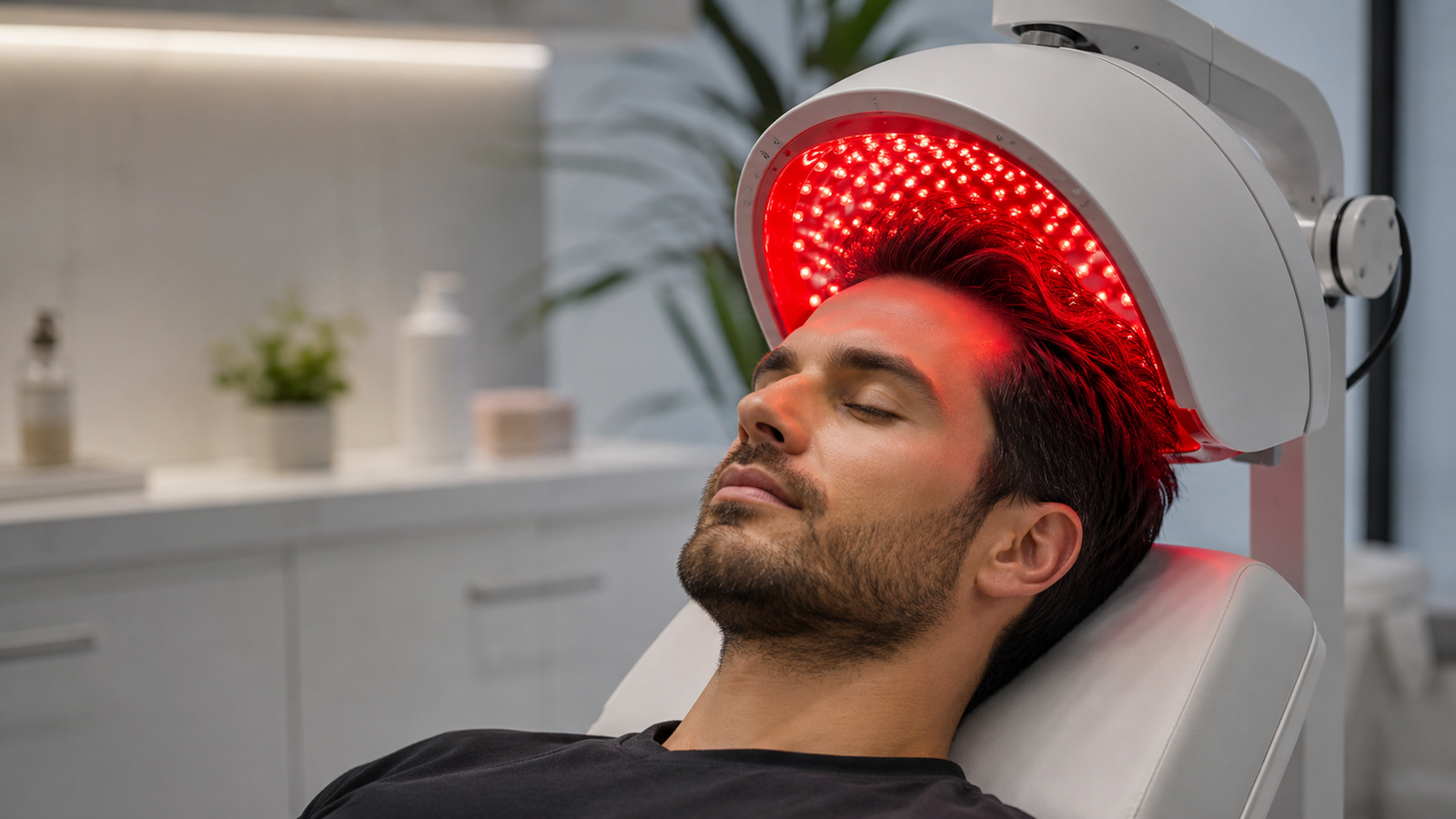
This is one reason red light therapy for hair restoration has become increasingly popular. Also known as low-level laser therapy (LLLT) or photobiomodulation therapy, it uses specific wavelengths of red or near-infrared light to stimulate the scalp and support healthier hair follicles.
But does red light therapy really work for hair loss? Is it better than minoxidil? Can at-home laser caps produce results? And how much does it cost?
This guide explains what patients should know before trying red light therapy for hair growth, including benefits, expected results, devices, side effects, costs, and when to speak with a hair restoration specialist.
What Is Red Light Therapy for Hair Restoration?
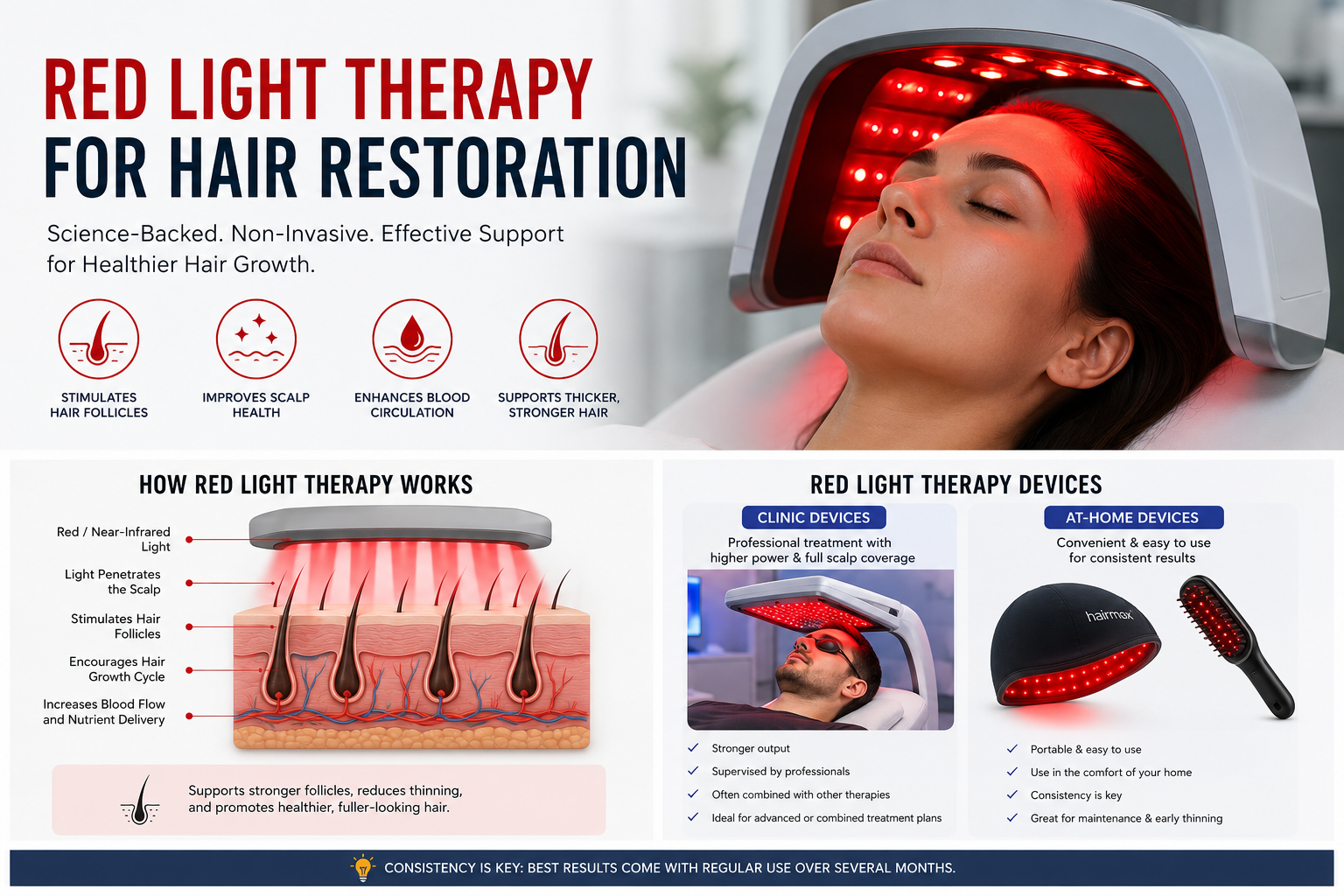
Red light therapy is a non-surgical treatment that exposes the scalp to low levels of red or near-infrared light. In hair restoration, the goal is to stimulate hair follicles, improve scalp conditions, and support the natural hair growth cycle.
You may see this treatment described as:
- Red light therapy for hair loss
- Low-level laser therapy
- Low-level light therapy
- LLLT for hair growth
- Photobiomodulation therapy
- Laser cap treatment
- Laser comb or laser helmet therapy
Although the names vary, the idea is similar: light energy is delivered to the scalp at controlled wavelengths and low intensity. It does not burn the skin, remove tissue, or work like surgical lasers. Instead, it is designed to stimulate biological activity in the scalp.
How Does Red Light Therapy Work for Hair Growth?
Hair grows in cycles. The main phases are:
- Anagen phase: active hair growth
- Catagen phase: transition phase
- Telogen phase: resting and shedding phase
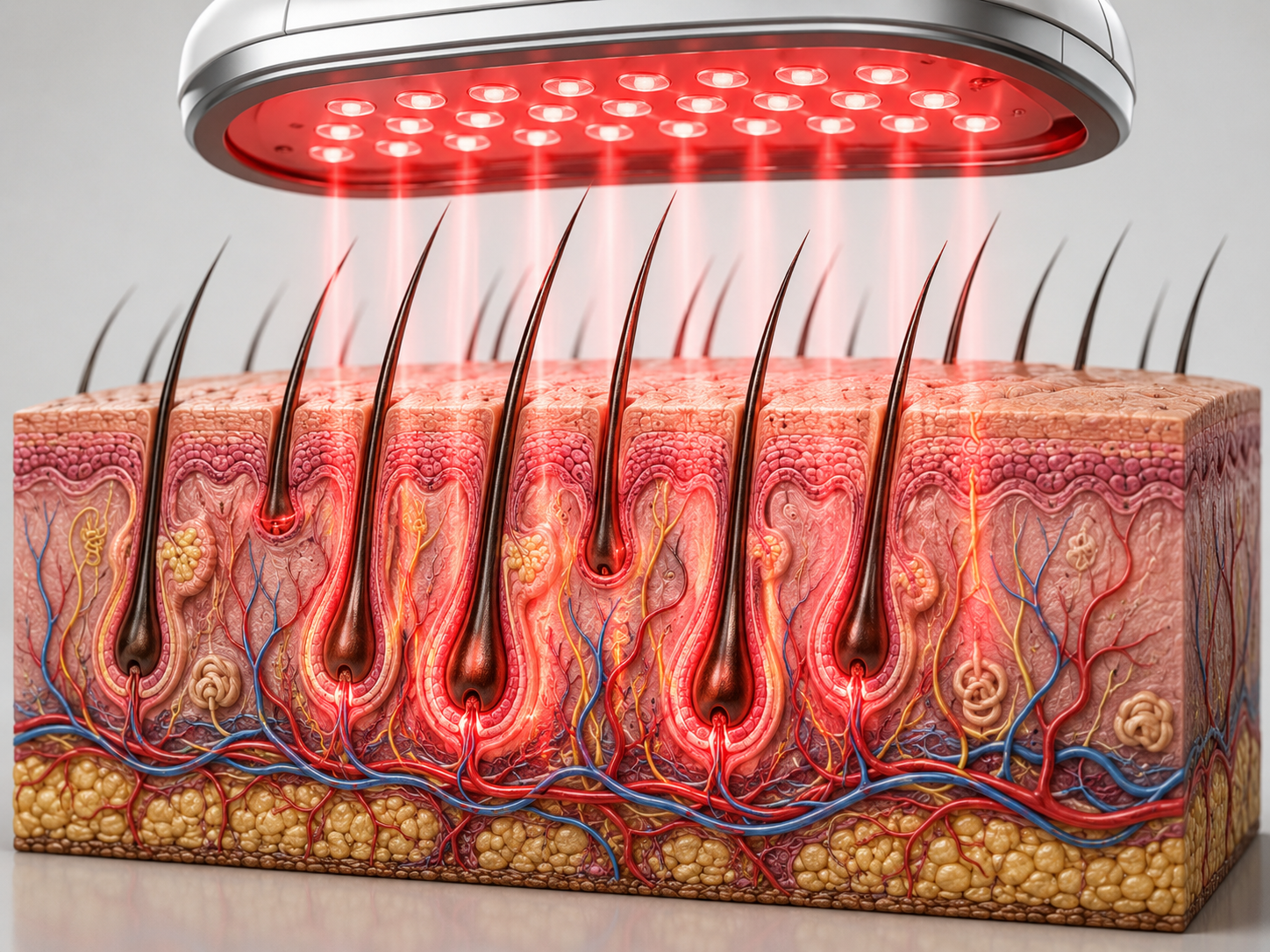
In pattern hair loss, many follicles gradually shrink. Hair becomes thinner, shorter, and less visible over time. Red light therapy may help by supporting follicles that are still alive but weakened.
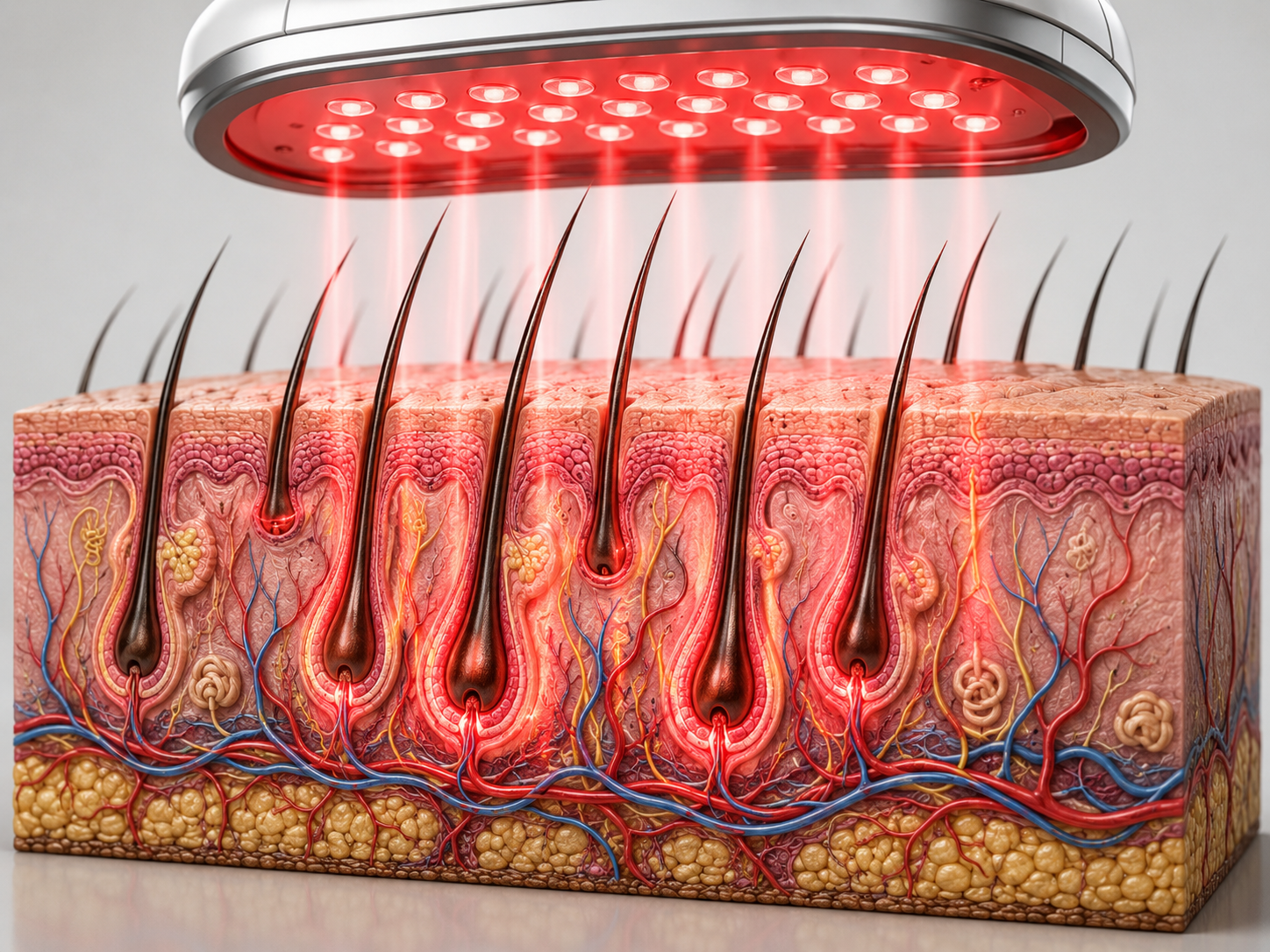
The proposed mechanisms include:
- Increasing cellular energy activity inside hair follicle cells
- Supporting blood flow and oxygen delivery to the scalp
- Helping follicles stay longer in the active growth phase
- Reducing inflammation around the follicle environment
- Improving the thickness and density of existing hair
It is important to understand that red light therapy does not create new follicles. It works best when follicles are still active. If an area has been completely bald for many years or the follicles are scarred or inactive, red light therapy is unlikely to restore full hair growth.
Does Red Light Therapy Really Work for Hair Loss?
The evidence is most promising for androgenetic alopecia, also known as male or female pattern hair loss. This is the most common type of hair thinning and is often linked to genetics, hormones, and follicle sensitivity.
Studies suggest that low-level light or laser therapy may improve hair density and hair thickness in some men and women with pattern hair loss. However, the results are usually gradual and vary from person to person.
Red light therapy is not a miracle cure. It may be helpful for:
- Mild to moderate hair thinning
- Early-stage male pattern hair loss
- Female pattern hair loss
- Patients who still have active follicles
- People who want a non-surgical option
- Patients using it alongside other hair loss treatments
It may be less effective for:
- Complete baldness
- Long-standing inactive follicles
- Scarring alopecia
- Untreated medical causes of hair loss
- Severe nutritional deficiency
- Hair loss caused by uncontrolled thyroid disease, autoimmune disease, or medication side effects
Before starting treatment, it is important to identify the real cause of hair loss. Not every type of shedding responds to red light therapy.
Who Is a Good Candidate for Red Light Therapy?
Red light therapy may be suitable for people who have early or moderate hair thinning and want a non-invasive treatment option. It is often considered for both men and women with pattern hair loss.
You may be a good candidate if:
- Your hair is thinning but the scalp is not completely bald
- You have early male or female pattern hair loss
- You want to support existing hair follicles
- You are not ready for a hair transplant
- You cannot tolerate certain hair loss medications
- You want to combine red light therapy with minoxidil, PRP, or other treatments
- You are willing to use the treatment consistently for several months
You may not be a good candidate if:
- The hair follicles in the area are no longer active
- You have scarring alopecia
- Your hair loss is caused by an untreated medical condition
- You expect fast or dramatic results
- You cannot commit to regular sessions
- You are using photosensitizing medication without medical advice
A dermatologist or hair restoration doctor can examine your scalp and help determine whether red light therapy is suitable for your type of hair loss.
Red Light Therapy for Male Pattern Hair Loss
Male pattern hair loss often begins with a receding hairline, thinning at the crown, or gradual loss of density on the top of the scalp. Red light therapy may help when hair follicles are miniaturized but still active.
For men, red light therapy is often used alongside:
- Minoxidil
- Finasteride
- Dutasteride in selected cases
- PRP therapy
- Hair transplant planning
- Medical scalp care
For early-stage thinning, red light therapy may help slow progression and improve hair quality. For advanced baldness, a hair transplant may be more appropriate if the patient has enough donor hair.
Patients considering surgical options can compare hair restoration doctors and hair transplant specialists on Tabeebo to understand available treatment paths before making a decision.
Red Light Therapy for Female Hair Thinning
Women may experience hair thinning for many reasons, including female pattern hair loss, postpartum shedding, stress, iron deficiency, thyroid problems, hormonal imbalance, polycystic ovary syndrome, and certain medications.
Red light therapy may help some women with female pattern hair loss, especially when thinning is diffuse and follicles are still active. However, diagnosis is very important. If the cause is low iron, thyroid disease, or another medical issue, light therapy alone will not solve the underlying problem.
Women considering red light therapy should ideally have a medical evaluation that may include:
- Scalp examination
- Hair pull test
- Ferritin or iron levels
- Thyroid function tests
- Vitamin D and B12 levels if needed
- Hormonal evaluation in selected cases
- Review of medication history
When the cause is properly diagnosed, red light therapy can be part of a broader plan that may include topical treatments, nutrition correction, PRP, or other medical therapies.
Clinic Red Light Therapy vs At-Home Devices
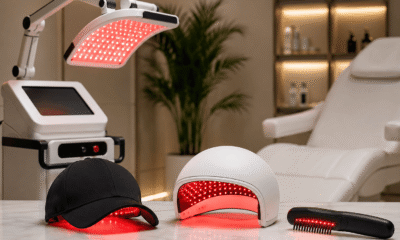
There are two main ways to use red light therapy for hair restoration: in a clinic or with an at-home device.
In-Clinic Red Light Therapy
Clinics may use professional light-based systems such as:
- Laser hoods
- Laser domes
- LED scalp panels
- Photobiomodulation devices
- Medical-grade laser helmets
- Combination hair restoration devices
Clinical devices may offer stronger output, better coverage, and professional supervision. They may also be combined with other treatments such as PRP, mesotherapy, minoxidil, scalp treatments, or post-hair-transplant recovery plans.
Clinic-based treatment may be better for patients who want:
- A supervised treatment plan
- Combination therapy
- Scalp assessment before treatment
- Progress monitoring
- Professional documentation with photos
- A customized hair restoration program
At-Home Red Light Therapy Devices
At-home devices are designed for regular use without visiting a clinic. Common options include:
- Laser caps
- Laser helmets
- Laser combs
- LED caps
- Red light therapy hats
- Handheld scalp devices
At-home devices are convenient, but results depend heavily on consistency and device quality. Some devices are FDA-cleared for pattern hair loss, while others may have limited evidence. Patients should avoid choosing a device based only on social media claims or influencer promotions.
A good at-home device should ideally have:
- Evidence-based wavelength range
- Adequate scalp coverage
- Clear usage instructions
- Safety information
- Clinical testing or regulatory clearance
- Comfortable design for long-term use
- Reliable manufacturer information
At-home devices may be useful for maintenance, early thinning, or patients who prefer a private treatment routine. However, they should not replace proper diagnosis when hair loss is sudden, severe, patchy, or medically unexplained.
What Wavelength Is Used for Hair Growth?
Many hair growth devices use red light in the range of approximately 630 to 670 nanometers, with some devices also using near-infrared light. These wavelengths are commonly studied in low-level light therapy and photobiomodulation.
However, wavelength is not the only factor that matters. Treatment results may also depend on:
- Energy output
- Treatment duration
- Distance from scalp
- Device coverage
- Frequency of use
- Hair density blocking the light
- Scalp condition
- Consistency over months
This is why two devices with similar marketing claims may not produce the same results.
How Long Does Red Light Therapy Take to Work?
Red light therapy requires patience. Hair growth is slow, and follicles need time to respond.
Many patients may start noticing reduced shedding or early changes after around 3 to 6 months of consistent use. More visible improvements in density or thickness may take longer, and maintenance is usually needed to preserve results.
A realistic timeline may look like this:
First 1–2 months
Most patients should not expect visible regrowth. The main goal is consistency.
3–4 months
Some patients may notice less shedding or improved hair texture.
4–6 months
Early visible improvements may appear in suitable candidates.
6–12 months
Hair density and thickness may continue improving with regular use.
After 12 months
Maintenance may be needed. Stopping treatment may allow hair thinning to progress again, especially in genetic hair loss.
Taking standardized photos every month can help track progress more accurately than relying on daily mirror checks.
How Often Should Red Light Therapy Be Used?
The schedule depends on the device and treatment protocol. Many at-home devices are used several times per week, while clinic protocols may vary.
Common treatment schedules include:
- 3 sessions per week
- 10 to 30 minutes per session
- Continuous use for at least 3 to 6 months
- Maintenance sessions after visible results
Patients should always follow the instructions provided by the device manufacturer or treating doctor. Using the device more often than recommended does not necessarily improve results and may increase irritation or reduce adherence.
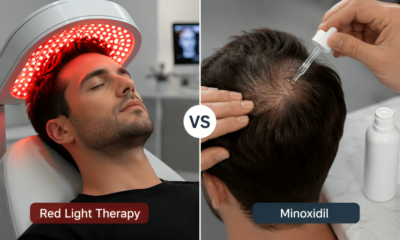
Red Light Therapy vs Minoxidil
Minoxidil is one of the most widely used treatments for androgenetic alopecia. It is available as a topical solution or foam and can help prolong the hair growth phase.
Red light therapy and minoxidil work differently:
| Feature | Red Light Therapy | Minoxidil |
|---|---|---|
| Type | Device-based treatment | Topical medication |
| Main use | Supports follicle activity | Stimulates hair growth cycle |
| Best for | Mild to moderate thinning | Male and female pattern hair loss |
| Time to results | Usually several months | Usually several months |
| Side effects | Usually mild | Scalp irritation, unwanted facial hair in some users |
| Consistency required | Yes | Yes |
| Can be combined? | Often yes | Often yes |
Many doctors may recommend combining red light therapy with minoxidil in suitable patients. Combination treatment may be more effective than relying on one method alone, but the right plan depends on diagnosis, sex, age, medical history, and hair loss severity.
Red Light Therapy vs PRP for Hair Loss
PRP, or platelet-rich plasma, involves drawing a small amount of the patient’s blood, processing it, and injecting concentrated platelets into the scalp. It is commonly used for pattern hair loss and hair thinning.
Compared with red light therapy:
- PRP is performed in a clinic
- Red light therapy can be used at home or in a clinic
- PRP involves injections
- Red light therapy is non-invasive
- PRP may require fewer sessions but higher per-session cost
- Red light therapy requires frequent long-term use
Some clinics combine PRP and red light therapy to support follicle stimulation from different angles. This may be useful for selected patients, but treatment should be customized.
Red Light Therapy After Hair Transplant
Red light therapy may sometimes be recommended after a hair transplant as part of a recovery or maintenance plan. The goal is not to replace the transplant, but to support scalp healing and the health of existing non-transplanted hair.
After a hair transplant, red light therapy may be considered to:
- Support scalp recovery
- Reduce inflammation
- Improve comfort
- Support existing miniaturized hairs
- Help maintain surrounding native hair
However, patients should only use red light therapy after hair transplant if approved by their surgeon. Timing matters, especially in the early healing period.
Can Red Light Therapy Replace a Hair Transplant?
No. Red light therapy and hair transplant surgery serve different purposes.
Red light therapy may help stimulate existing follicles. A hair transplant moves healthy follicles from donor areas to areas with permanent hair loss.
If follicles are still active, red light therapy may help improve density. But if an area is already bald and follicles are no longer functioning, a hair transplant may be the more effective option.
In many cases, the best plan may combine several approaches:
- Medical therapy to slow ongoing hair loss
- Red light therapy to support existing follicles
- PRP for selected patients
- Hair transplant for advanced or stable bald areas
- Long-term maintenance to protect results
This is why a personalized consultation is important before choosing a treatment.
Side Effects of Red Light Therapy for Hair Loss
Red light therapy is generally considered safe when used correctly. It is non-invasive and does not involve surgery or medication.
Possible side effects may include:
- Mild scalp warmth
- Temporary redness
- Dryness or irritation
- Headache in some users
- Eye discomfort if protection is not used properly
- Worsening irritation if used on inflamed scalp
People should be cautious if they:
- Use photosensitizing medications
- Have a history of light sensitivity
- Have active scalp infection
- Have suspicious scalp lesions
- Are undergoing cancer treatment
- Have a medical condition requiring dermatologist supervision
Eye safety is also important. Some devices require protective eyewear, especially if light may reach the eyes.
How Much Does Red Light Therapy for Hair Restoration Cost?
The cost depends on whether treatment is done at a clinic or with an at-home device.
At-home device cost
At-home red light therapy devices vary widely in price. Simple handheld devices or combs may cost a few hundred dollars, while advanced laser caps or helmets may cost from several hundred to more than a thousand dollars.
Factors affecting price include:
- Number of laser diodes or LEDs
- Full-scalp coverage
- Device brand
- Regulatory clearance
- Treatment time
- Battery/wireless features
- Clinical testing
- Warranty and support
Clinic treatment cost
Clinic-based red light therapy may be priced per session or sold as a package. Costs vary by country, clinic, device type, and whether it is combined with PRP, mesotherapy, transplant care, or medical hair loss treatment.
Clinic packages may be more expensive upfront, but they often include evaluation, progress tracking, and professional supervision.
Patients should not choose based on price alone. The key question is whether the treatment is appropriate for the type and stage of hair loss.
What Results Can You Realistically Expect?
Realistic expectations are essential. Red light therapy may help improve hair density, thickness, and shedding in suitable candidates, but it does not work equally for everyone.
You may expect:
- Gradual reduction in shedding
- Improved hair thickness
- Better scalp coverage in thinning areas
- Stronger existing hair
- Better maintenance when combined with other treatments
You should not expect:
- Overnight results
- Full regrowth on completely bald scalp
- Permanent results after stopping treatment
- Equal results from all devices
- A cure for all causes of hair loss
The best outcomes are usually seen when red light therapy is part of a complete hair restoration strategy.
Common Mistakes Patients Make
Many people try red light therapy without understanding why their hair is falling out. This can waste time and money.
Common mistakes include:
- Buying a device without diagnosis
- Expecting results in a few weeks
- Using the device inconsistently
- Choosing cheap devices with poor coverage
- Ignoring iron, thyroid, or hormonal problems
- Stopping proven treatments too early
- Using red light therapy on completely bald areas
- Not taking progress photos
- Believing exaggerated online claims
Red light therapy can be useful, but it should be used with realistic expectations and proper medical guidance.
The Future of Red Light Therapy for Hair Restoration
Red light therapy is likely to become more refined over the next few years. Future developments may include:
- Better device designs with improved scalp coverage
- More personalized treatment protocols
- Combination therapy with PRP, exosomes, minoxidil, or growth factors
- Smarter at-home devices that track adherence
- Improved clinical research comparing wavelengths and energy settings
- More evidence for post-transplant recovery and maintenance
- AI-supported scalp analysis to monitor progress
The future of hair restoration is unlikely to depend on one treatment alone. Instead, patients may benefit from personalized plans that combine diagnosis, medical therapy, regenerative treatments, devices, and surgical options when needed.
Frequently Asked Questions
Does red light therapy regrow hair?
Red light therapy may help improve hair growth in some people with mild to moderate pattern hair loss. It works best when hair follicles are still active. It is unlikely to regrow hair in areas where follicles are permanently inactive.
Is red light therapy good for male pattern baldness?
It may help some men with early or moderate male pattern hair loss. In advanced baldness, medical therapy or hair transplant surgery may be more appropriate.
Can women use red light therapy for hair thinning?
Yes, some women with female pattern hair loss may benefit from red light therapy. However, women should be evaluated for possible causes such as iron deficiency, thyroid problems, hormonal imbalance, stress, or postpartum shedding.
How long does it take to see results?
Many patients need at least 3 to 6 months of consistent use before noticing visible improvement. Some may need 6 to 12 months for clearer changes.
Is red light therapy better than minoxidil?
Not necessarily. They work differently and may be used together in suitable patients. Minoxidil remains a common medical treatment, while red light therapy may be a non-invasive supportive option.
Can I use red light therapy after hair transplant?
Possibly, but only if your hair transplant surgeon approves it. Timing and device settings matter after surgery.
Are laser caps worth it?
Laser caps may be worth considering for suitable candidates with early or moderate pattern hair loss, especially if the device is high quality and used consistently. However, they are not a substitute for diagnosis or a guaranteed solution.
Does red light therapy have side effects?
Side effects are usually mild but may include scalp warmth, irritation, dryness, headache, or eye discomfort. People with photosensitivity or certain medical conditions should ask a doctor before use.
Can red light therapy stop hair loss permanently?
No. Genetic hair loss is usually progressive. Red light therapy may help manage thinning, but long-term maintenance is often needed.
Should I see a doctor before trying red light therapy?
Yes, especially if hair loss is sudden, patchy, severe, or associated with itching, scaling, pain, hormonal symptoms, or medical conditions. Proper diagnosis improves the chance of choosing the right treatment.
Final Thoughts
Red light therapy for hair restoration is one of the most promising non-surgical options for people with early or moderate hair thinning. It may help improve hair density, reduce shedding, and support healthier follicles, especially when used consistently over several months.
However, it is not a cure for every type of hair loss. It works best when follicles are still active and when treatment is part of a complete plan that may include medical therapy, PRP, lifestyle correction, or hair transplant surgery.
If you are considering red light therapy, start with a proper diagnosis. A dermatologist or hair restoration specialist can help determine whether your hair loss is genetic, hormonal, nutritional, inflammatory, or related to another medical cause.
For patients exploring advanced options, Tabeebo allows users to compare experienced hair restoration doctors and hair restoration specialists, helping them make more informed decisions before starting treatment.
References
American Academy of Dermatology Association. Red light therapy: Uses, benefits, and risks.
DermNet NZ. Low dose laser therapy for hair loss.
Perez SM et al. Low-Level Laser and LED Therapy in Alopecia. Dermatologic Surgery.
Lueangarun S et al. A Systematic Review and Meta-analysis of Randomized Controlled Trials of Low-Level Laser Therapy for Pattern Hair Loss. Journal of Clinical and Aesthetic Dermatology.
Avci P et al. Low-Level Laser Therapy for Treatment of Hair Loss. Lasers in Surgery and Medicine.
Adil A, Godwin M. The effectiveness of treatments for androgenetic alopecia: A systematic review and meta-analysis. Journal of the American Academy of Dermatology.
Jimenez JJ et al. Efficacy and safety of a low-level laser device in the treatment of male and female pattern hair loss. American Journal of Clinical Dermatology.
Stanford Medicine. Red light therapy: What the science says.