G-spot enhancement, also called G-spot augmentation or the G-shot, is a procedure promoted by some cosmetic gynecology clinics to increase sensitivity in the anterior vaginal wall and potentially improve sexual pleasure.
Some providers offer injections of hyaluronic acid fillers or platelet-rich plasma (PRP), while other clinics advertise laser, radiofrequency or surgical procedures for similar goals.
But an important question deserves attention: Does G-spot enhancement actually improve sexual satisfaction, and is it safe?
Although some patients report positive experiences, high-quality scientific evidence demonstrating reliable benefits remains insufficient. The anatomical existence of a distinct G-spot is also debated.
In this updated Tabeebo guide, we examine the scientific research, proposed treatments, possible complications, realistic expectations and alternatives supported by medical evidence.
What Is the G-Spot? Understanding the Anatomy
The term G-spot, or Gräfenberg spot, refers to a proposed sexually sensitive region associated with the anterior vaginal wall, near the urethra.
It was named after gynecologist Ernst Gräfenberg, whose work contributed to scientific discussion about vaginal sensitivity.
Some women report heightened sensation when this region is stimulated. However, researchers have not established that a single, anatomically distinct structure exists in the same location in every woman.
What Does Scientific Research Say?
A systematic review published in Sexual Medicine in 2021 evaluated 31 eligible studies investigating the G-spot’s anatomy, location and existence.
Among the findings:
- In six questionnaire-based studies involving 5,072 participants, 62.9% reported perceiving a G-spot or sensitive vaginal area.
- Clinical examination and anatomical studies produced inconsistent findings.
- Imaging studies did not establish one consistently identifiable structure.
- Researchers found no agreement about its precise location, size or anatomical nature.
The authors concluded that the existence of a distinct G-spot remains unproven.
Importantly, the 62.9% figure describes participants’ perceptions. It does not mean that 62.9% of women have a medically identifiable G-spot, nor does it measure the success of enhancement procedures.
Source: Vieira-Baptista et al., G-spot: Fact or Fiction? A Systematic Review, Sexual Medicine, 2021.
What Is G-Spot Enhancement or G-Shot Injection?
G-spot enhancement refers to procedures intended to alter tissue in the anterior vaginal wall, generally with the aim of making the area more prominent or potentially changing the sensation associated with it.
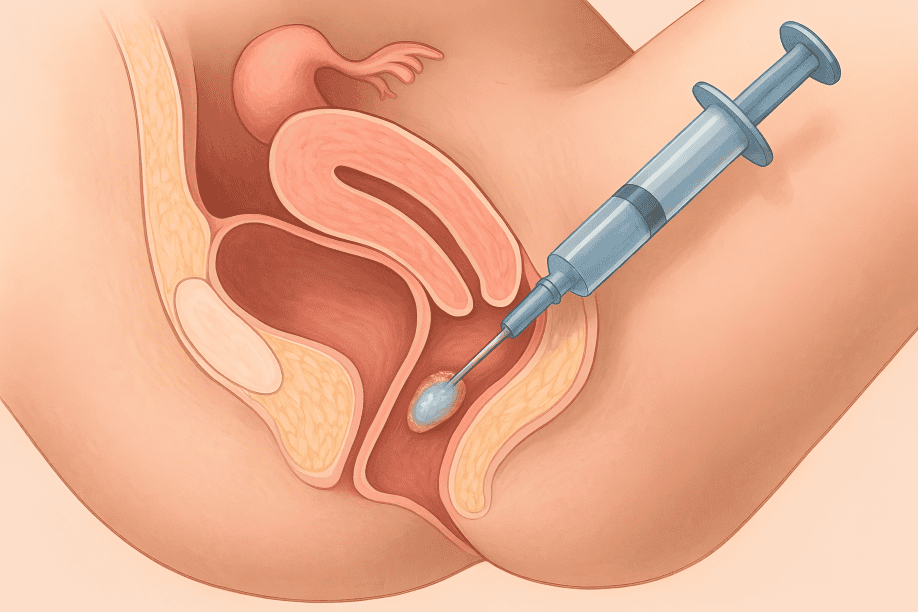
The best-known approach is an injection of a dermal filler, commonly described as a G-shot.
Some clinics also use the term for PRP injections, although PRP and hyaluronic acid fillers are biologically different substances.
How Are G-Shot Procedures Marketed?
They are commonly described as minimally invasive outpatient procedures.
Clinics may advertise local anesthesia, a relatively short treatment appointment and limited downtime.
However, there is no universally accepted, evidence-based protocol for G-spot enhancement, including the optimal injection site, material, volume, expected results or repeat-treatment schedule.
The lack of an established anatomical target makes standardization particularly challenging.
Patients should not assume that a procedure is safe simply because it is performed in a clinic or does not involve traditional surgery.
Types of G-Spot Enhancement Procedures
1. Hyaluronic Acid Filler Injections
Hyaluronic acid is used in many established medical and cosmetic applications.
In G-spot augmentation, some practitioners inject filler into a selected area of the anterior vaginal wall to increase local tissue volume.
The proposed rationale is that this might modify local pressure or sensation during sexual activity.
However, increasing tissue volume has not been reliably shown to improve orgasm frequency, intensity or overall sexual satisfaction.
The evidence remains limited, and the safety of the specific product and injection site must be established rather than assumed.
Potential concerns include pain, bleeding, infection, tissue reactions and unintended changes in sensation.
2. Platelet-Rich Plasma (PRP) and the O-Shot
PRP is prepared from a patient’s own blood and contains concentrated platelets.
Some clinics offer injections into vulvovaginal tissues under names such as the O-shot.
These treatments are marketed for improved arousal, sensitivity, lubrication or sexual satisfaction.
However, studies differ in their PRP preparation methods, injection sites, participant selection and reported outcomes.
Current research is insufficient to establish PRP injections as a standard treatment for female orgasmic difficulties.
Using a substance prepared from the patient’s blood does not guarantee clinical effectiveness or freedom from complications.
3. Laser and Radiofrequency Procedures
Some clinics advertise energy-based devices for improving vaginal sensitivity or sexual function.
These devices use laser or radiofrequency energy to produce thermal effects in selected tissues.
However, the US Food and Drug Administration (FDA) has warned against unsupported marketing claims for vaginal rejuvenation and sexual-function treatments.
Possible complications include burns, scarring, pain during intercourse and persistent discomfort.
Laser and radiofrequency treatments should not be presented as proven substitutes for diagnosing and treating female sexual dysfunction.
4. Surgical G-Spot Augmentation
Some surgical approaches have been proposed to alter the tissues of the anterior vaginal wall.
These are not established standard treatments for enhancing orgasm.
Surgery introduces additional concerns, including scarring, infection, altered sensation, pain and the potential need for further procedures.
The lack of reliable effectiveness data is particularly important when a proposed intervention may produce irreversible changes.
Does G-Spot Enhancement Actually Work?
This is the most important question for patients considering treatment.
What Do Clinical Studies Suggest?
Some small studies and case series have reported improved self-assessed sexual function following injections into vulvovaginal tissues.
However, many studies have important limitations:
- Small participant groups.
- Absence of placebo or sham-treatment controls.
- Inconsistent definitions of the intervention.
- Short follow-up periods.
- Different questionnaires and outcome measures.
- Limited reporting of adverse events.
Reported satisfaction after a procedure cannot, by itself, demonstrate that the treatment caused a clinically meaningful improvement.
What Do Professional Medical Organizations Recommend?
The American College of Obstetricians and Gynecologists (ACOG) includes G-spot amplification among elective genital cosmetic procedures for which strong evidence of effectiveness and safety is lacking.
Its guidance emphasizes informed consent, realistic counseling and discussion of complications.
A 2025 statement from the International Federation of Gynecology and Obstetrics (FIGO) took an even more cautious position on elective cosmetic genital surgery without a medical indication, stating that recommending such procedures is not ethically appropriate when sufficient evidence of safety and effectiveness is lacking.
Sources: ACOG — Elective Female Genital Cosmetic Surgery and FIGO Statement, June 2025.
G-Spot Enhancement: What Is Known and What Remains Uncertain?
| Patient question | Current evidence |
|---|---|
| Is there a distinct anatomical G-spot? | Not consistently established |
| Can some women experience sensitivity in the anterior vaginal wall? | Yes, individual experiences vary |
| Do fillers reliably improve orgasms? | High-quality evidence is insufficient |
| Does PRP reliably improve sexual function? | Not established |
| Are laser or RF treatments proven to improve sexual pleasure? | Not established for the commonly marketed indications |
| Are G-shot injections risk-free? | No |
| How long do results last? | No validated duration applicable to all patients |
| Are there established alternatives for specific sexual-health problems? | Yes, depending on diagnosis |
How Long Do G-Spot Enhancement Results Last?
Some commercial clinics advertise effects lasting several months, commonly describing periods such as six to twelve months.
However, such estimates should not be presented as medically established outcomes.
There is insufficient high-quality research to define a reliable duration of improved sexual function after G-spot augmentation.
The persistence of injected material is also not equivalent to lasting improvement in sensation or sexual satisfaction.
Patients should be cautious about packages promising guaranteed results or routine repeat injections.
What Are the Risks of G-Spot Enhancement?
Even procedures described as minimally invasive can cause complications.
Possible risks include:
- Pain or discomfort at the treatment site.
- Bruising or bleeding.
- Infection.
- Inflammatory or tissue reactions.
- Altered or reduced sensation.
- Pain during sexual activity.
- Scarring or other tissue changes.
- Unsatisfactory results.
- Additional treatment to manage complications.
The anterior vaginal wall is close to the urethra and surrounding structures, making anatomical knowledge particularly important.
There are insufficient long-term safety data to accurately estimate the frequency of all complications for these procedures.
A lack of reported complications in small studies does not establish that a treatment is safe.
Who Should Seek a Medical Evaluation Before Considering Enhancement?
Anyone experiencing persistent or distressing sexual difficulties should receive an appropriate assessment before considering an invasive cosmetic intervention.
The evaluation may include questions about:
- Difficulty with arousal or orgasm.
- Pain during intercourse.
- Vaginal dryness.
- Menopausal or postpartum changes.
- Current medications, including some antidepressants.
- Pelvic floor muscle dysfunction.
- Neurological or medical conditions.
- Stress, anxiety or relationship concerns.
Not every variation in sexual response is a medical disorder.
According to contemporary sexual-medicine consensus definitions, the presence of clinically significant personal distress is important when determining whether a sexual-function problem requires treatment.
The goal should be to identify treatable causes rather than assume that the vaginal anatomy needs modification.
Evidence-Based Alternatives for Female Sexual Wellness
1. Sexual Health Counseling and Therapy
Professional counseling or sex therapy may help patients experiencing distress related to desire, arousal, orgasm or intimacy.
Care may involve education, behavioral approaches, communication and assessment of emotional or relationship factors.
2. Treatment of Vaginal Dryness
Vaginal dryness can occur during menopause, breastfeeding or as a result of medications and other medical conditions.
Depending on the cause, management may include vaginal moisturizers, lubricants or prescribed treatments such as low-dose vaginal estrogen.
These options address specific symptoms rather than attempting to change a proposed G-spot.
For related information, see Vaginal Dryness Treatment on Tabeebo.
3. Pelvic Floor Physiotherapy
Specialized pelvic floor physiotherapy may help with selected muscle dysfunction, pelvic discomfort and certain sexual pain disorders.
Treatment should be individualized.
Excessively tense pelvic floor muscles may require relaxation-focused techniques rather than indiscriminate strengthening exercises.
4. Medication and Hormonal Review
Some medications or hormonal changes may contribute to reduced arousal, lubrication or orgasmic difficulties.
A clinician can evaluate whether adjustments or evidence-based treatments are appropriate.
Prescribed medicines should not be stopped without medical advice.
5. Medical Sexual-Function Assessment
Persistent difficulties with orgasm or arousal may warrant evaluation by a gynecologist, sexual-medicine specialist or other appropriately trained clinician.
Tabeebo also provides information about sexual health disorders and related healthcare providers.
Cost of G-Spot Enhancement: What Should Patients Consider?
Prices vary by country, clinic, material, number of sessions and follow-up services.
However, price comparisons should not be the first consideration when the effectiveness of a procedure remains uncertain.
Before paying for treatment, patients should ask whether the quotation includes:
- An initial medical assessment.
- Details of the injected substance or device.
- Information about regulatory status.
- Treatment-related risks.
- Aftercare and follow-up.
- Management of complications.
- Potential costs of additional procedures.
No reliable international average price or standardized cost-effectiveness estimate can currently establish that G-spot enhancement provides good value for treating sexual dysfunction.
Choosing a Qualified Specialist
A consultation with a qualified gynecologist or sexual-medicine professional should focus on the patient’s concerns, diagnosis and available alternatives.
Important questions include:
- What specific medical problem is the procedure intended to address?
- Is there reliable clinical evidence supporting its effectiveness?
- Is the product or device authorized for this intended use in my country?
- What risks and long-term uncertainties are known?
- Could the treatment alter sensitivity or cause pain?
- What non-invasive or established alternatives exist?
- What happens if the procedure does not achieve the expected result?
- Who would manage complications?
A responsible consultation should not promise guaranteed orgasms or pressure patients into procedures they do not need.
Frequently Asked Questions About G-Spot Enhancement
Is the G-spot scientifically proven to exist?
A distinct anatomical G-spot has not been consistently demonstrated in scientific studies. Individual differences in sensitivity and sexual experience are real, but they do not establish a universal structure.
Does a G-shot guarantee stronger orgasms?
No. There is insufficient reliable evidence to guarantee increased orgasm frequency, intensity or sexual satisfaction.
Is G-spot enhancement FDA-approved?
Patients should not assume that a dermal filler or device approved for another medical or cosmetic indication is also approved specifically for G-spot enhancement. The authorization of the exact product and proposed use must be checked.
Is the G-shot a permanent procedure?
Injectable fillers are generally used for temporary tissue-volume changes, but the duration of any sexual benefit is not scientifically established. Surgical changes may be more lasting, with potentially greater risks.
Is PRP safer than fillers?
There is not enough comparative evidence to establish that PRP is safer or more effective for this purpose.
Can G-spot injections treat difficulty reaching orgasm?
They are not an established first-line treatment for orgasmic difficulties. A medical and sexual-health assessment is recommended to identify possible contributing factors.
Is vaginal laser treatment an alternative?
Laser and radiofrequency devices have been marketed for sexual function, but their effectiveness and safety for those purposes remain insufficiently established.
Are these procedures recommended after childbirth?
Childbirth alone is not an indication for G-spot augmentation. Symptoms following childbirth should be assessed individually, including the possible role of pelvic floor dysfunction, scars or hormonal changes.
Can menopause affect sexual satisfaction?
Yes. Menopausal changes can contribute to vaginal dryness and discomfort, but these symptoms have established treatment options that differ from cosmetic G-spot procedures.
When should someone consult a healthcare professional?
Seek evaluation for persistent sexual pain, bleeding, vaginal dryness, new changes in sensation, distressing orgasmic difficulties or symptoms that affect everyday wellbeing.
Conclusion: A More Informed Approach to Female Sexual Wellness
Female sexual wellbeing involves physical health, emotional wellbeing, individual preferences and the quality of intimate relationships.
G-spot enhancement has attracted attention through cosmetic gynecology marketing, but its proposed benefits are not supported by sufficiently strong clinical evidence.
Research has not established one anatomically consistent G-spot, nor has it demonstrated that injecting or surgically modifying the anterior vaginal wall reliably improves orgasms.
For patients experiencing sexual-health concerns, a comprehensive medical assessment and discussion of established treatment options are more appropriate starting points.
Tabeebo helps users explore healthcare information and compare medical providers so they can seek informed, individualized consultations.
Medical and Scientific References
- Vieira-Baptista et al. — G-spot: Fact or Fiction? A Systematic Review, Sexual Medicine, 2021.
- ACOG — Elective Female Genital Cosmetic Surgery, Committee Opinion No. 795.
- FIGO — Statement on Cosmetic Genital Surgery, June 2025.
- Society of Obstetricians and Gynaecologists of Canada — Guideline No. 423.
- German, Austrian and Swiss Medical Societies — Reconstructive and Aesthetic Surgeries on the Female Genitalia, 2022.
- American Society of Plastic Surgeons — O-Shot and G-Shot Overview.
- AUA/SUFU/AUGS — Genitourinary Syndrome of Menopause Guideline, 2025.
Medical disclaimer: This article provides general educational information. It is not a recommendation to undergo G-spot augmentation and does not replace individualized assessment by a qualified healthcare professional.