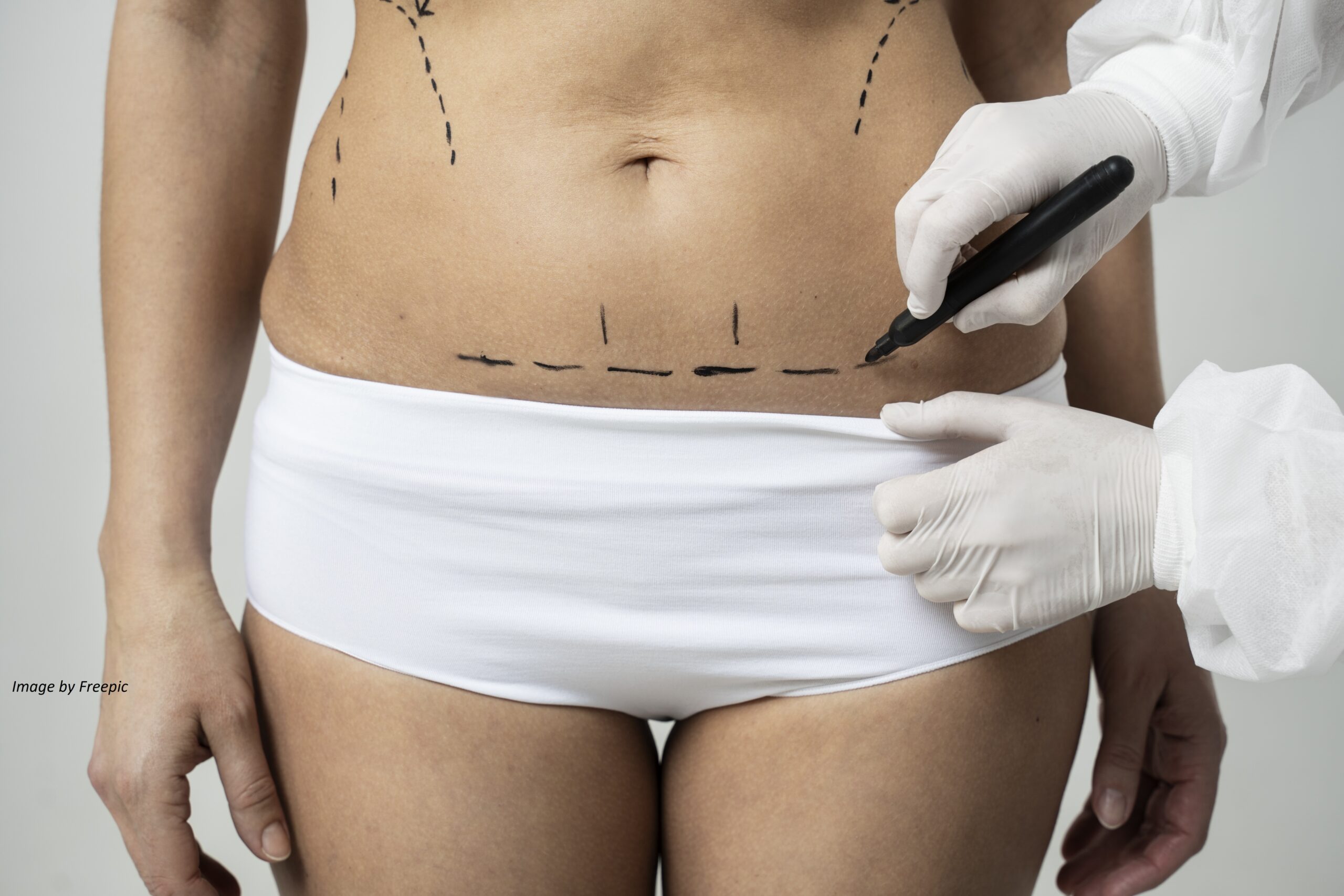
Abdominoplasty, commonly known as a tummy tuck, is a cosmetic surgical procedure that removes excess abdominal skin and fat and, when necessary, repairs separation or weakness of the abdominal wall. It aims to create a smoother, firmer abdominal contour.
The procedure is often considered after pregnancy or significant weight loss, especially when loose skin does not respond to exercise.
However, a tummy tuck is not a weight-loss procedure, and it cannot replace healthy nutrition or physical activity.
In this Tabeebo guide, we explain the different techniques, how abdominoplasty compares with liposuction, what recovery involves, and the main risks patients should understand.
Types of Abdominoplasty: Full, Mini and Extended
The surgical approach depends on the amount and location of excess skin, abdominal anatomy and individual goals.
| Technique | What it involves | Typically considered for |
|---|---|---|
| Full tummy tuck | Removes excess skin, often repairs abdominal-wall separation and repositions the navel | Significant skin laxity above and below the navel |
| Mini tummy tuck | Uses a more limited incision and primarily treats the lower abdomen | Selected patients with less extensive loose skin below the navel |
| Extended tummy tuck | Extends the incision toward the flanks to remove more excess skin | Extensive skin laxity after major weight loss |
A mini tummy tuck is not automatically safer or more suitable simply because its incision is shorter.
Can a Tummy Tuck Repair Separated Abdominal Muscles?
Pregnancy and other factors may cause diastasis recti, in which the two rectus abdominal muscles become separated along the midline.
During some tummy tuck procedures, the surgeon can tighten the connective tissue between these muscles to improve abdominal-wall contour.
Not everyone requires muscle repair, and not every case of diastasis recti needs surgery.

Tummy Tuck vs. Liposuction: What’s the Difference?
Although both procedures can reshape the abdomen, they address different concerns.
| Comparison | Tummy tuck | Liposuction |
|---|---|---|
| Main purpose | Remove loose skin and improve abdominal contour | Remove localized fat deposits |
| Removes significant excess skin | Yes | No |
| Can address abdominal-wall separation | In selected cases | No |
| Typical scars | Longer lower-abdominal scar | Smaller access incisions |
| Recovery | Generally more extensive | Often shorter for limited procedures |
Some patients may benefit from a combination of both procedures, but combining surgery can also affect risk and recovery.
For further information, explore Liposuction on Tabeebo.
How Common Is Tummy Tuck Surgery?
According to the American Society of Plastic Surgeons (ASPS), approximately 173,251 tummy tuck procedures were performed in the United States in 2025, representing a 2% increase compared with 2024.
Abdominoplasty ranked third among the cosmetic surgical procedures reported by ASPS that year.
These figures describe US procedural estimates within the report, not worldwide surgery volumes or success rates.
Source: ASPS — 2025 Plastic Surgery Statistics.
Who Is a Suitable Candidate?
A tummy tuck may be considered by adults who are in generally good health, have a relatively stable weight, and are concerned about loose abdominal skin or abdominal-wall changes.
Before surgery, the specialist should assess smoking or nicotine use, medications, previous operations, underlying medical conditions and the risk of blood clots.
If you are planning a future pregnancy or substantial weight loss, postponing surgery may be advisable, since these changes can affect the surgical result.
An appropriate consultation should also establish realistic expectations about scars and recovery.
What Happens During the Operation?
A tummy tuck is usually performed under general anesthesia.
The surgeon makes an incision across the lower abdomen, removes excess skin and fat, and repairs the abdominal wall when indicated. A full abdominoplasty commonly requires repositioning the navel.
The incision is then closed, and drains or a compression garment may be used depending on the surgical plan.
The NHS reports that a tummy tuck typically takes approximately 2–5 hours, although the duration varies.
Tummy Tuck Recovery: How Long Does It Take?
Recovery is gradual. The NHS advises that patients may need approximately 4–6 weeks away from work and strenuous exercise.
| Recovery period | What to expect |
|---|---|
| First week | Swelling, bruising, discomfort and limited movement |
| Weeks 2–3 | Gradual improvement and follow-up visits |
| Weeks 4–6 | Return to many activities if approved by the surgeon |
| Following months | Residual swelling reduces and scars continue to mature |
Your surgeon may recommend a compression garment, gentle walking and restrictions on lifting or exercise.
Scar appearance can continue changing for 12–18 months.
Follow postoperative instructions carefully and do not restart strenuous exercise until cleared by the surgical team.
Source: NHS — Tummy Tuck: Recovery.
Risks and Possible Complications
Abdominoplasty is major surgery and carries risks, including:
- Infection, bleeding or hematoma.
- Fluid accumulation (seroma).
- Delayed wound healing and visible scarring.
- Numbness or changes in skin sensation.
- Blood clots, including deep vein thrombosis or pulmonary embolism.
- Unfavorable contour or the need for revision surgery.
Smoking and certain health conditions can increase the likelihood of complications.
Seek emergency medical attention for sudden chest pain, breathing difficulties or symptoms suggesting a blood clot. Severe or worsening abdominal pain, significant bleeding or signs of wound infection also require prompt assessment.
Source: ASPS — Tummy Tuck Risks and Safety.
How Much Does a Tummy Tuck Cost?
The total price depends on the country, surgical technique, surgeon’s qualifications, anesthesia, hospital fees and any additional liposuction or other procedures.
When comparing quotes, confirm whether they include preoperative tests, surgical facilities, compression garments, postoperative visits and complication management.
For patients considering surgery abroad, travel arrangements and access to follow-up care are especially important.
A low advertised price should never be the main reason for choosing a provider.
Frequently Asked Questions
Is a tummy tuck a weight-loss surgery?
No. It is a body-contouring operation that removes excess skin and some fat. It is not a treatment for obesity.
Can abdominoplasty remove stretch marks?
Stretch marks located on skin that is surgically removed may disappear. Others may remain, so complete removal is not guaranteed.
Are tummy tuck results permanent?
The removed tissue does not return, but aging, weight changes and future pregnancies can affect the abdominal contour.
Will I have a scar?
Yes. A lower-abdominal scar is expected, and full abdominoplasty usually also leaves a scar around the navel. Scars often fade with time but do not disappear completely.
Conclusion
A tummy tuck can improve abdominal contour when loose skin or abdominal-wall changes cannot be adequately addressed through exercise or liposuction alone.
However, it requires careful patient selection, substantial recovery time and acceptance of surgical risks and permanent scars.
Through Tabeebo, you can explore tummy tuck treatment information and relevant healthcare providers and contact qualified professionals for an individual assessment.
Medical References
- NHS — Tummy Tuck: Procedure, Recovery and Risks.
- American Society of Plastic Surgeons — Tummy Tuck Overview.
- ASPS — Tummy Tuck Risks and Safety.
- ASPS — 2025 Plastic Surgery Statistics.
Medical disclaimer: This article is for educational purposes and does not replace an individual assessment by a qualified plastic surgeon.