Facelift surgery, medically known as rhytidectomy, is a cosmetic procedure that lifts and repositions sagging facial tissues to improve the contours of the cheeks, jawline and lower face. It may also be combined with neck surgery.
Unlike Botox or dermal fillers, which primarily address wrinkles or lost volume, a facelift targets tissue sagging. However, it cannot stop natural aging or guarantee a particular appearance.
If you’re considering surgery, understanding the differences between techniques, recovery times and potential complications is more important than choosing the newest-sounding procedure.
Types of Facelift Surgery: Which Technique Is Best?
Surgeons use different approaches depending on facial anatomy, skin laxity and treatment goals.
| Technique | Main characteristics | Common considerations |
|---|---|---|
| Traditional facelift | Repositions underlying tissues and removes excess skin | More extensive facial sagging |
| Mini facelift | Usually uses shorter incisions and a more limited lift | Selected patients with milder lower-face sagging |
| SMAS facelift | Repositions or tightens the superficial musculoaponeurotic system | Structural support of the cheeks and jawline |
| Deep-plane facelift | Mobilizes deeper tissue layers while repositioning facial structures | Selected cases requiring more extensive tissue release |
Is a Deep-Plane Facelift Better Than SMAS?
Deep-plane facelifts receive considerable attention in cosmetic-surgery marketing, but scientific findings are more nuanced.
A 2025 systematic review of 47 studies involving 10,766 patients found that deep-plane and SMAS techniques had broadly comparable safety profiles.
The authors also noted that direct comparative studies were limited, making it difficult to establish that one technique consistently provides better outcomes.
Therefore, surgeon expertise, individual anatomy and realistic treatment planning matter more than the procedure’s marketing name.
Research: Comparing SMAS and Deep-Plane Facelifts — Systematic Review, 2025.
How Popular Is Facelift Surgery?
According to the American Society of Plastic Surgeons (ASPS), facelift procedures in its US statistics increased by 13% in 2025 compared with 2024.
This reflects growing use of the procedure within the report’s scope, not proof that surgery is necessary or suitable for everyone.
Source: ASPS — 2025 Plastic Surgery Trends.
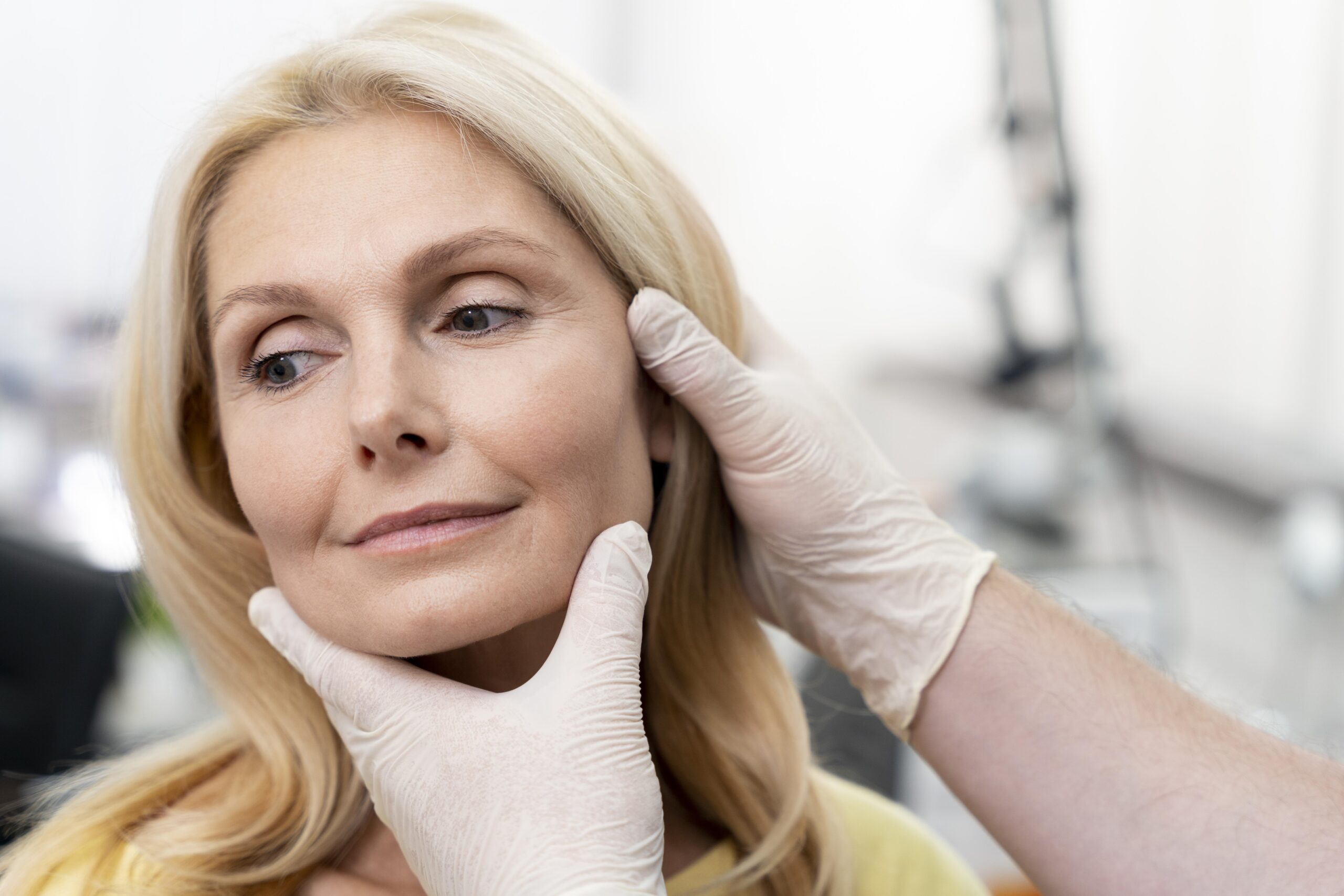 Image by Freepic
What Happens During a Facelift?
After evaluating the patient’s health, facial structure and goals, the surgeon recommends an individualized surgical plan.
Facelifts are commonly performed using general anesthesia or local anesthesia with sedation, depending on the operation.
Incisions are usually placed around the ears and may extend into the hairline. The surgeon lifts or repositions facial tissues, removes excess skin when appropriate and closes the incisions.
Some patients undergo a neck lift or another complementary procedure during the same operation.
Facelift Recovery: How Long Does Healing Take?
According to the UK’s National Health Service (NHS), many patients need approximately 2–4 weeks for initial recovery.
| Time after surgery | Typical experience |
|---|---|
| First few days | Swelling, bruising, tightness and discomfort |
| Days 7–14 | Follow-up and possible removal of non-dissolving stitches |
| Weeks 2–4 | Gradual return to many everyday activities |
| Months 6–9 | More complete appearance as residual swelling settles |
Recovery varies. More extensive surgery or complications may require additional time.
Patients should follow their surgeon’s instructions concerning wound care, sleeping position, medication, exercise and driving.
Source: NHS — Facelift Surgery and Recovery.
Facelift Risks and Possible Complications
Facelift surgery carries risks that should be discussed before consent.
These include bleeding or hematoma, infection, delayed healing, visible scars, facial asymmetry, temporary or persistent changes in sensation, and possible facial nerve injury.
Smoking, certain medicines and underlying health conditions may increase the risk of complications.
Rapidly increasing swelling, severe worsening pain or significant bleeding after surgery requires urgent assessment by the surgical team.
Facelift vs. Non-Surgical Alternatives
Surgery is not the only option for facial rejuvenation.
Botox may reduce certain expression lines, while dermal fillers can restore volume in selected areas. Laser treatments primarily address skin texture and pigmentation, rather than substantial tissue sagging.
A thread lift is another minimally invasive option, but its degree and durability of lifting are not equivalent to a surgical facelift.
For a broader overview, see Facial Rejuvenation on Tabeebo.
How Much Does Facelift Surgery Cost?
The price depends on the country, surgeon, surgical technique, hospital fees, anesthesia and any additional procedures.
A mini facelift and a combined face-and-neck lift can have very different costs.
When comparing quotations, ask whether consultations, anesthesia, operating-room expenses and postoperative visits are included.
Avoid choosing a provider solely because a package appears inexpensive. Professional qualifications, experience and access to postoperative care are essential.
Frequently Asked Questions
How long do facelift results last?
Results can remain noticeable for several years, but aging continues. There is no guaranteed duration for every patient.
What is the best age for a facelift?
There is no universally ideal age. Facial anatomy, skin laxity, general health and patient goals are more important than an arbitrary age threshold.
Will a facelift leave scars?
Yes. Incisions leave scars, although surgeons usually position them around natural creases and the hairline to make them less noticeable.
How can I choose a qualified surgeon?
Check professional licensing, relevant plastic or facial plastic surgery qualifications, experience with the proposed procedure, complication management and follow-up arrangements.
Conclusion
Facelift surgery can improve facial sagging and definition, but the outcome depends on careful patient selection and surgical expertise.
Recent research does not establish deep-plane surgery as the best choice for every patient. A personalized evaluation remains essential.
Through Tabeebo, you can explore facelift treatment information and related providers and contact suitable specialists to discuss the available options.
Medical References
- NHS — Facelift (Rhytidectomy).
- ASPS — 2025 Plastic Surgery Trends.
- Systematic Review — SMAS vs. Deep-Plane Facelift, 2025.
Medical disclaimer: This article is for general information and does not replace an individualized consultation with a qualified surgeon.