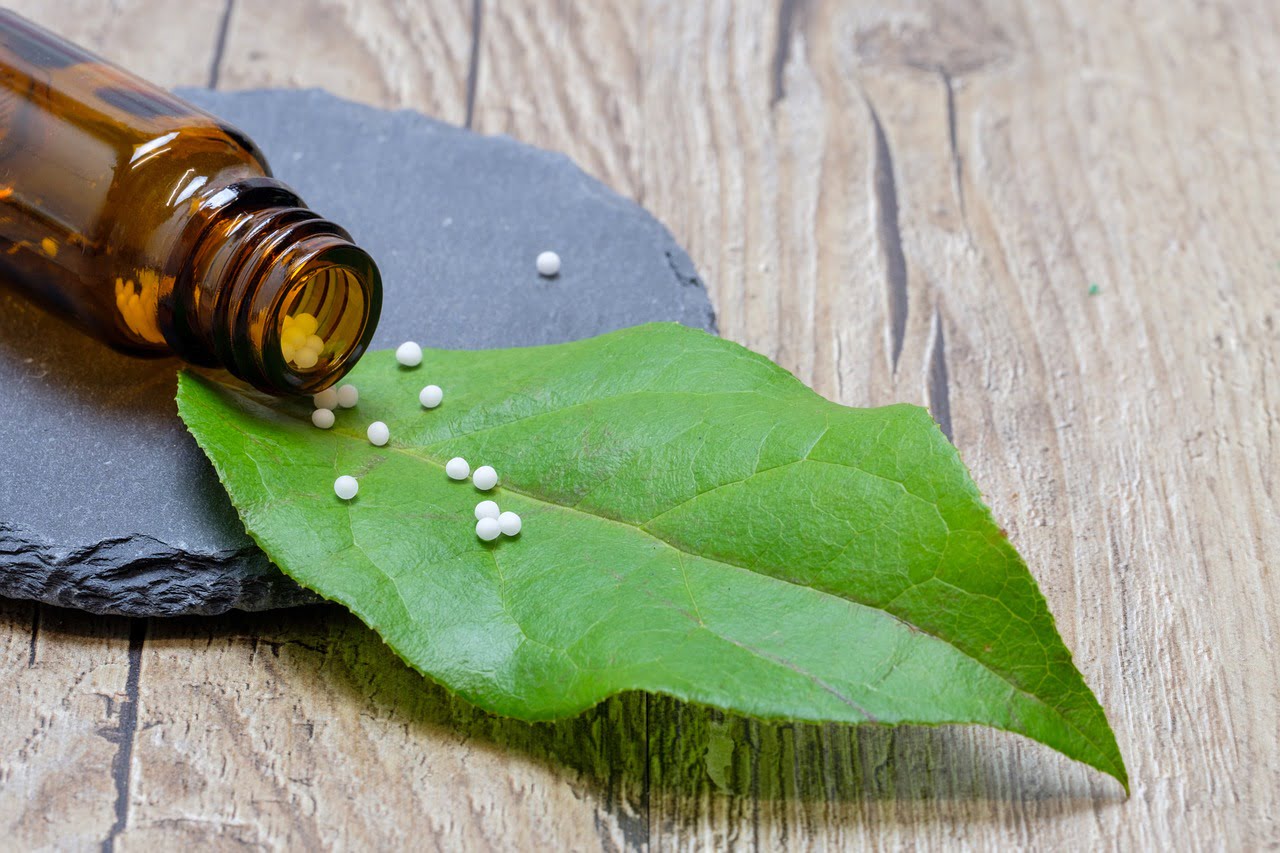
Homeopathy is a system of alternative medicine developed in Germany more than 200 years ago. It is based on the belief that substances capable of producing symptoms in healthy people may treat similar symptoms when administered in highly diluted preparations.
Homeopathic products are promoted for conditions ranging from allergies and migraines to skin disorders, digestive problems and chronic pain. However, reliable scientific evidence has not established homeopathy as an effective treatment for any specific health condition, and some products may carry safety risks.
Does homeopathy work beyond the placebo effect? Why are its remedies repeatedly diluted? Are homeopathic medicines safe? And what do recent scientific reviews reveal?
In this updated Tabeebo guide, we explore the history of homeopathy, its traditional principles, common remedies, clinical research, safety concerns and differences from other complementary medical systems.
History of Homeopathy: The Origins of an Alternative Medical System
Homeopathy was developed in the late 18th century by Samuel Hahnemann (1755–1843), a German physician.
At the time, certain established medical practices, including extensive bloodletting and the use of toxic substances, could be harmful.
Hahnemann criticized some of these treatments and sought a different approach.
In 1796, he introduced the principle of similia similibus curentur, commonly translated as “like cures like.”
Hahnemann and the Cinchona Experiment
A frequently cited episode in the history of homeopathy involves Hahnemann’s experiments with cinchona bark.
Cinchona contains compounds related to quinine, which was historically used to treat malaria.
Hahnemann believed that taking cinchona produced symptoms resembling malaria in a healthy person. He interpreted this observation as support for the idea that substances producing certain symptoms could treat similar symptoms.
However, his historical observations do not constitute reliable clinical evidence supporting the principle.
The Organon of Medicine
In 1810, Hahnemann published the first edition of Organon of the Healing Art, an influential work outlining his system of homeopathic practice.
The book was subsequently revised and became a foundational text of homeopathy.
Although homeopathy gained followers across Europe and later in other regions, its historical development should be distinguished from evidence of therapeutic effectiveness.
For additional background, see the US National Library of Medicine’s historical discussion of Hahnemann and homeopathic literature.
The Three Main Principles of Homeopathy
Homeopathy is built around concepts that differ substantially from established pharmacology and biomedical science.
1. Like Cures Like
The principle of like cures like proposes that a substance causing symptoms in a healthy individual may treat similar symptoms in a person who is ill.
For example, under this theory, a substance that causes watery eyes or a runny nose might be selected for someone experiencing allergy-like symptoms.
However, producing similar symptoms does not demonstrate that a substance can treat the underlying illness.
Medical effectiveness must be established through controlled clinical research.
2. The Law of Minimum Dose
Homeopathy proposes that repeatedly diluting a substance, together with vigorous shaking, can increase its therapeutic potency.
This differs from established pharmacological principles, which investigate the relationship between active compounds, doses, biological mechanisms and clinical effects.
Many homeopathic preparations are diluted to such an extent that no molecules of the original ingredient are expected to remain in a normal dose.
3. Individualized Treatment
Homeopathic consultations may include questions about physical symptoms, emotions, sleep, diet, lifestyle and personal characteristics.
Different patients with the same conventional medical diagnosis may therefore be assigned different homeopathic preparations.
Individualized attention can influence patients’ experiences of care. However, personalization alone does not establish that a remedy has a specific therapeutic effect.
How Are Homeopathic Remedies Prepared?
Homeopathic remedies may begin with plant, mineral, animal or chemical substances.
They typically undergo repeated dilution, with vigorous shaking—known as succussion—between steps.
Common dilution scales include:
| Label | Meaning |
|---|---|
| 6X or 6D | Six successive 1:10 dilutions |
| 6C | Six successive 1:100 dilutions |
| 30C | Thirty successive 1:100 dilutions |
What Does a 30C Dilution Mean?
A 30C preparation is theoretically diluted by a factor of one part in 10^60.
At such an extreme dilution, a typical dose would not be expected to contain even one molecule of the original ingredient, assuming ordinary preparation conditions.
Some homeopathic explanations propose that water retains information or a form of memory associated with the original substance.
However, the proposed therapeutic mechanism of water memory has not been established by reproducible scientific evidence.
Not all products sold as homeopathic are diluted to the same extent. Some may contain measurable amounts of biologically active ingredients.
Source: NCCIH — Homeopathy: What You Need to Know.
Common Homeopathic Remedies and Their Traditional Uses
Homeopathy includes preparations derived from many different substances.
Examples include:
Arnica montana: Traditionally marketed for bruising, muscular discomfort and injuries.
Nux vomica: Promoted in homeopathy for digestive complaints, stress or sleep-related symptoms. The original plant contains strychnine, a highly toxic substance.
Ignatia amara: Traditionally associated with emotional distress, grief and certain stress-related complaints.
Belladonna: Derived from a poisonous plant and used in certain homeopathic preparations.
These are descriptions of traditional or marketed uses—not medically established treatments.
The safety of a product depends partly on its actual ingredients, concentration, manufacturing quality and route of administration.
Does Homeopathy Actually Work? What Scientific Research Shows
The most important question is whether homeopathic treatments provide reliable benefits beyond placebo.
Researchers assess this using randomized controlled trials, systematic reviews and comparisons with established treatment.
The 2015 Australian Government Evidence Review
Australia’s National Health and Medical Research Council (NHMRC) assessed evidence from 57 systematic reviews containing 176 individual studies.
Its evaluation concluded that no reliable evidence established homeopathy as effective for any health condition reviewed.
The assessment considered the quality, size and methodological limitations of the available studies.
Source: NCCIH — Review of Scientific Evidence on Homeopathy.
The 2024 Australian Government Review: A More Detailed Assessment
A subsequent evidence evaluation prepared for the Australian Government’s Natural Therapies Review 2024 examined outcomes across multiple conditions.
Its overall conclusion was that homeopathy appeared to provide little or no benefit compared with placebo for most priority outcomes where evidence was available.
However, the review identified low-certainty evidence suggesting possible benefit for two specific outcomes.
| Condition | Outcome studied | Evidence |
|---|---|---|
| Allergic rhinitis | Reduced medication use in one trial involving 108 participants | Low certainty |
| Atopic dermatitis (eczema) | Reduced disease severity across three trials involving 172 participants | Low certainty |
| Various other conditions | Outcomes involving asthma, anxiety, insomnia, back pain and others | Often little or no benefit, uncertainty, or insufficient evidence |
The distinction between low-certainty evidence and established clinical effectiveness is essential.
Low-certainty findings may change substantially when better-designed or larger studies become available.
The same review found little or no benefit for several other outcomes, including quality of life in atopic dermatitis and certain asthma-related outcomes.
These findings do not justify recommending homeopathy as a replacement for effective treatment of allergies, eczema or other medical conditions.
Source: Australian Government — Natural Therapies Review 2024: Homeopathy Evidence Evaluation.
What About Studies Reporting Positive Results?
Some individual studies and meta-analyses have reported results favoring homeopathy.
For example, a systematic review of meta-analyses published in 2023 reported positive pooled results in some placebo-controlled research.
However, combining studies across different conditions, products and treatment approaches does not demonstrate that a particular homeopathic remedy is effective for a specific diagnosis.
The reliability of conclusions depends on study quality, risk of bias, consistency, sample size and the ability to reproduce results.
Source: Systematic Review of Meta-Analyses of Randomized Homeopathy Trials — 2023.
Overall, organizations including NCCIH and NHS Scotland conclude that there is insufficient reliable, high-quality evidence supporting homeopathy as a treatment for specific health conditions.
Homeopathy and the Placebo Effect
A placebo effect refers to changes in symptoms or experiences that can occur because of expectations, treatment context and associated psychological or physiological responses rather than a treatment’s specific active effect.
When someone reports feeling better after homeopathic treatment, several factors may contribute:
- Natural recovery from an illness.
- Normal fluctuations in symptoms.
- Expectations about the treatment.
- Reassurance and attention received during consultations.
- Other treatments used at the same time.
- Changes in lifestyle or behavior.
A patient’s experience of improvement can be genuine without demonstrating that the homeopathic preparation caused it.
This is why controlled studies are more reliable than testimonials when establishing whether a medical intervention works.
Homeopathy for Allergies, Migraines and Eczema
Homeopathy is frequently promoted for these conditions. The evidence should be considered separately for each.
Homeopathy for Allergies and Asthma
Some small studies have explored homeopathy for allergic rhinitis.
The 2024 Australian review identified a low-certainty signal of reduced medication use in one trial, but this does not establish reliable effectiveness for allergic conditions generally.
For asthma, substituting homeopathy for prescribed inhalers or other established treatments may be dangerous.
Poorly controlled asthma can lead to severe attacks requiring emergency care.
To understand conventional diagnosis and treatment approaches, explore Tabeebo’s guide to allergies and asthma: symptoms, causes and management.
You can also explore allergists and immunologists listed on Tabeebo when seeking evaluation of persistent allergic symptoms.
Homeopathy for Migraines
Homeopathic products are sometimes promoted for migraine prevention or headache relief.
However, reliable evidence has not established homeopathy as an effective migraine treatment.
People experiencing recurrent headaches should obtain appropriate medical assessment, particularly if symptoms are new, severe or changing.
Tabeebo provides profiles of neurologists who may help patients explore established approaches to migraine diagnosis and management.
Homeopathy for Eczema
The Australian 2024 evidence review found low-certainty evidence suggesting a possible reduction in eczema severity in a small group of studies.
However, evidence for other outcomes, including improvements in quality of life, did not show consistent benefit.
These findings are insufficient to recommend homeopathy instead of evidence-based eczema care.
Patients with persistent dermatitis can explore dermatologists on Tabeebo for assessment and treatment information.
Are Homeopathic Medicines Safe?
It is incorrect to assume that every homeopathic product is harmless because many remedies are highly diluted.
There are several possible risks.
1. Active or Toxic Ingredients
Some products labeled as homeopathic contain measurable amounts of active substances.
Depending on their concentration, these may cause side effects, toxicity or interactions with prescribed medicines.
For example, certain products may contain substances derived from belladonna, nux vomica or other toxic materials.
2. Manufacturing and Quality Problems
Inaccurate dilution, contamination and poor manufacturing controls can result in products that differ from their labeled composition.
The US Food and Drug Administration (FDA) has issued warnings concerning homeopathic products, including preparations marketed for children.
3. Delaying Effective Medical Treatment
One of the most serious risks is substituting homeopathy for treatments with established benefits.
This can be particularly dangerous for patients with serious infections, asthma, diabetes, cancer, cardiovascular disease or other potentially life-threatening conditions.
4. Special Risks for Children
The FDA previously warned that certain homeopathic teething tablets contained excessive amounts of belladonna.
This demonstrates why products marketed as natural or suitable for infants should not automatically be assumed safe.
Sources:
FDA — Some Homeopathic Products May Put You at Risk
NCCIH — Homeopathy: Safety and Side Effects.
Is Homeopathy Approved by the FDA?
No product labeled as homeopathic has FDA approval as a drug in the United States.
According to the FDA, these products have not undergone its standard review establishing safety and effectiveness for their marketed medical uses.
The FDA regulates homeopathic products as drugs and applies risk-based oversight and enforcement.
However, a product being available for sale does not mean it has been demonstrated to work.
Regulatory arrangements differ between countries, and legal availability should not be confused with scientific validation.
Source: FDA — Homeopathic Products.
Where Is Homeopathy Practiced?
Homeopathy originated in Germany and subsequently spread internationally.
Germany
Germany is the historical birthplace of homeopathy. Homeopathic products and practitioners remain part of its complementary-medicine landscape.
India
Homeopathy has a substantial presence in India, including dedicated educational, professional and regulatory institutions.
However, official recognition of a medical tradition does not automatically establish the effectiveness of its treatments.
United Kingdom
Homeopathy has a long history in the UK, but public health authorities have taken a critical position on its clinical evidence.
NHS Scotland states that good-quality evidence does not support homeopathy as an effective treatment for health conditions.
United States
Homeopathic products are available in the US, but the FDA has not approved any homeopathic product as a drug.
The regulation of practitioners varies between states.
Homeopathy vs. Herbal Medicine, Ayurveda and Traditional Chinese Medicine
Although these approaches are frequently grouped under complementary and alternative medicine, their theoretical principles differ.
| Medical tradition | Main theoretical basis | Typical practices |
|---|---|---|
| Homeopathy | Like cures like and serial dilution | Highly diluted preparations |
| Herbal medicine | Use of substances and compounds derived from plants | Herbal extracts, teas and preparations |
| Ayurveda | Vata, Pitta and Kapha doshas | Herbs, dietary practices, massage and traditional procedures |
| Traditional Chinese Medicine | Qi, yin and yang | Acupuncture, herbs, tai chi and manual therapies |
| Persian Traditional Medicine | Humoral theory and temperament | Dietary practices, herbal preparations and historical manual therapies |
An important distinction is that ordinary herbal medicines may contain measurable pharmacologically active compounds, while many highly diluted homeopathic products are not expected to contain detectable amounts of the original ingredient.
However, the presence of active plant compounds does not automatically make herbal remedies effective or safe.
For further reading, explore Tabeebo’s articles on:
- Ayurveda: History, Treatments and Scientific Evidence
- Traditional Chinese Medicine: History, Practices and Evidence
- Persian Traditional Medicine: Historical Principles and Treatments
Ongoing Research: Homeopathy, Nanoparticles and Proposed Mechanisms
Some researchers have investigated the physical and chemical characteristics of highly diluted homeopathic preparations.
Topics include possible nanoparticles, interactions with container materials and the physical properties of prepared solutions.
These studies may raise questions about how specific preparations are manufactured or characterized.
However, identifying particles or other physical characteristics in a solution does not establish that the product treats disease.
Demonstrating clinical effectiveness still requires appropriately designed human trials showing meaningful, reproducible health benefits.
Consequently, research into nanoparticles should not be presented as proof that homeopathy works.
Can Homeopathy Be Used Alongside Conventional Treatment?
Some people use homeopathic preparations while continuing prescribed medical care.
However, using a product alongside an established treatment does not necessarily mean the product adds a proven benefit.
Before using homeopathic preparations:
- Inform your doctor or pharmacist about the product and its ingredients.
- Do not stop prescribed medication without medical advice.
- Avoid products with unclear ingredients or claims of guaranteed cures.
- Do not delay diagnosis or treatment for serious symptoms.
- Take additional care with products intended for children or during pregnancy.
For people with persistent pain, Tabeebo also provides information about chronic pain management and the healthcare services involved in multidisciplinary treatment.
Frequently Asked Questions About Homeopathy
Is Homeopathy Scientifically Proven?
There is insufficient reliable evidence that homeopathy is an effective treatment for specific health conditions. Some studies report benefits, but the overall evidence is limited, uncertain or inconsistent.
Is Homeopathy the Same as Herbal Medicine?
No. Homeopathy relies on the principles of like cures like and repeated dilution. Herbal medicine involves plant-derived compounds, often at measurable concentrations.
Does Homeopathy Work Better Than a Placebo?
High-quality evidence has not established consistent, clinically meaningful effects beyond placebo for specific conditions. Limited low-certainty positive findings have been reported for selected outcomes, but these do not demonstrate reliable therapeutic effectiveness.
Are Homeopathic Remedies Completely Safe?
No. Some products contain active or toxic ingredients, and manufacturing problems or contamination may cause harm. Delaying effective treatment is an additional risk.
Can Homeopathy Treat Cancer or Asthma?
There is no reliable scientific evidence supporting homeopathy as an effective treatment for these conditions. Replacing established medical care can be dangerous.
Is Homeopathy Suitable for Children?
Products marketed for children should not automatically be assumed safe or effective. Some have been subject to FDA warnings. Consult an appropriate healthcare professional before giving such products to a child.
Can Homeopathic Products Replace Vaccines?
No. Products marketed as homeopathic immunizations do not have credible scientific evidence supporting their use as substitutes for recommended vaccines.
How Long Does Homeopathy Take to Work?
There is no scientifically established treatment timeline that applies to homeopathy generally. Claims that particular conditions should improve within a fixed number of days or months are not supported by reliable clinical evidence.
Conclusion: The Place of Homeopathy in Modern Healthcare
Homeopathy is an alternative medical system founded in Germany in the late 18th century. It is based on the principles of like cures like, serial dilution and individualized treatment.
Despite its historical significance and continued use in different countries, the available clinical evidence does not reliably establish homeopathy as an effective treatment for specific medical conditions.
The Australian Government’s more recent evidence review identified limited, low-certainty signals of benefit for selected outcomes, while finding little or no benefit for many others.
Safety also deserves attention. Certain homeopathic products may contain harmful substances, and replacing or delaying effective medical care can lead to serious consequences.
The most responsible approach is to assess health claims using reliable scientific evidence, understand potential risks and make treatment decisions with appropriately qualified healthcare professionals.
Through Tabeebo, readers can discover and compare healthcare professionals and services relevant to their symptoms and medical needs.
Scientific and Medical References
- National Center for Complementary and Integrative Health — Homeopathy: What You Need to Know.
- Australian Government — Natural Therapies Review 2024: Homeopathy Evidence Evaluation.
- NHS Inform — Homeopathy: Evidence, Safety and Regulation.
- US Food and Drug Administration — Homeopathic Products.
- FDA — Some Homeopathic Products May Put You at Risk.
- Systematic Review of Meta-Analyses of Randomized Homeopathy Trials (2023).
- From Hahnemann’s Hand to Your Computer Screen — Historical Research.
Medical disclaimer: This article is for educational purposes and does not replace medical diagnosis, advice or treatment.